Picture this: I’m standing in my kitchen, the summer sun slanting through the window, and my neighbor’s dog is barking in the backyard like a metronome. I’ve been chasing that sweet, sun‑kissed peach flavor all week, but every attempt has ended with soggy slices or a batter that feels like a soggy pancake. Then, one impulsive night, I decided to throw a sourdough crust into the mix, hoping it’d give the peaches a crispy, buttery hug. The result was a glorious, caramel‑golden surface that cracked like a perfect sunrise, and I knew I’d stumbled upon something extraordinary.
The moment the peaches hit the hot pan, a symphony of sizzling sounds erupted—like tiny fireworks that whispered “delicious.” The aroma was a heady mix of toasted bread, sweet peach, and a hint of vanilla, drifting into my kitchen like a warm hug. Every bite was a contrast: the outside crisped to a golden crunch while the inside remained a juicy, buttery melt. The sauce, a velvety crème anglaise, drizzled over the top, coating each bite like a silky blanket that left a lingering, buttery aftertaste. It was the kind of dish that makes you stop mid‑conversation and simply savor the moment.
If you’ve ever tried a standard fried peach recipe, you’ll know the common pitfalls: over‑cooking the peaches, ending up with a mushy mess, or missing that perfect balance between sweet and savory. I dare you to taste this and not go back for seconds. I’m not exaggerating—this is hands down the best version you’ll ever make at home. The secret? A simple sourdough crust that adds depth, a carefully balanced batter that keeps the peaches juicy, and a crème anglaise that ties everything together with a silky finish. And that’s not the only trick—stay tuned, because I’ve got a few more surprises that will blow your taste buds away.
Most recipes get this completely wrong. Here’s what actually works: a batter that’s just thick enough to coat the peaches without drowning them, a sourdough crust that’s crisp on the outside and tender on the inside, and a crème anglaise that’s silky but not overpowering. I’ll be honest—I ate half the batch before anyone else got a bite, but that’s because it was that good. Picture yourself pulling this out of the pan, the whole kitchen smelling incredible, and a plate of golden, caramelized peaches waiting to be devoured. Let me walk you through every single step—by the end, you’ll wonder how you ever made it any other way.
What Makes This Version Stand Out
- Flavor: The caramelized peach notes mingle with the subtle tang of sourdough, creating a layered taste that’s both nostalgic and fresh.
- Texture: Crispy on the outside, juicy on the inside, with a buttery crumb that melts in your mouth.
- Simplicity: Only a handful of pantry staples, no fancy gadgets, and a single pan for the entire process.
- Uniqueness: The sourdough crust gives depth that most fried peach recipes lack, turning a simple dessert into a gourmet experience.
- Crowd Reaction: Friends always ask for the recipe after the first bite—this dish is a show‑stopper at gatherings.
- Ingredient Quality: Using ripe peaches, real butter, and a homemade crème anglaise elevates the dish from ordinary to extraordinary.
- Cooking Method: Quick pan‑frying paired with a silky sauce keeps the overall cooking time under 45 minutes.
- Make‑Ahead Potential: The crème anglaise can be prepared a day in advance, saving you time on the day of serving.
Alright, let's break down exactly what goes into this masterpiece…
Inside the Ingredient List
The Flavor Base
All-purpose flour is the backbone of our batter, giving it structure without overpowering the peaches. Using a fine‑grade flour ensures a smooth, silky coating that doesn’t leave any gritty residue. If you’re looking for a healthier twist, substitute half the flour with whole wheat; just be aware it will change the batter’s texture slightly. Skipping the flour will result in a watery batter that won’t hold the peaches together, so keep it in the mix.
The Texture Crew
Eggs are the secret glue that bind everything together, creating a cohesive batter that clings to each peach slice. The ratio of 2 eggs to 1 cup of milk yields a batter that’s thick enough to coat yet thin enough to fry quickly. If you’re allergic to eggs, you can replace them with ¼ cup of unsweetened applesauce per egg; the texture will be slightly different but still pleasant. Butter, added in small amounts, brings a buttery crunch to the crust and enhances the overall flavor profile.
The Unexpected Star
Sourdough bread crumbs are the star that gives this dish its unique depth. The tangy, fermented notes of the bread contrast beautifully with the sweet peaches, creating a complex flavor profile. Use freshly toasted sourdough for the best results; the toasted crumbs add a nutty aroma and a satisfying crunch. If you don’t have sourdough on hand, a plain crust can work, but the flavor will be less dynamic.
The Final Flourish
The crème anglaise is the silky, custard‑like sauce that ties everything together. It’s made from heavy cream, egg yolks, sugar, and vanilla, creating a smooth coating that balances the richness of the fried peaches. The sauce should be thick enough to cling to the peaches but thin enough to drizzle. If you prefer a lighter version, replace half the heavy cream with whole milk; the sauce will still be creamy but with fewer calories.
Everything's prepped? Good. Let's get into the real action…
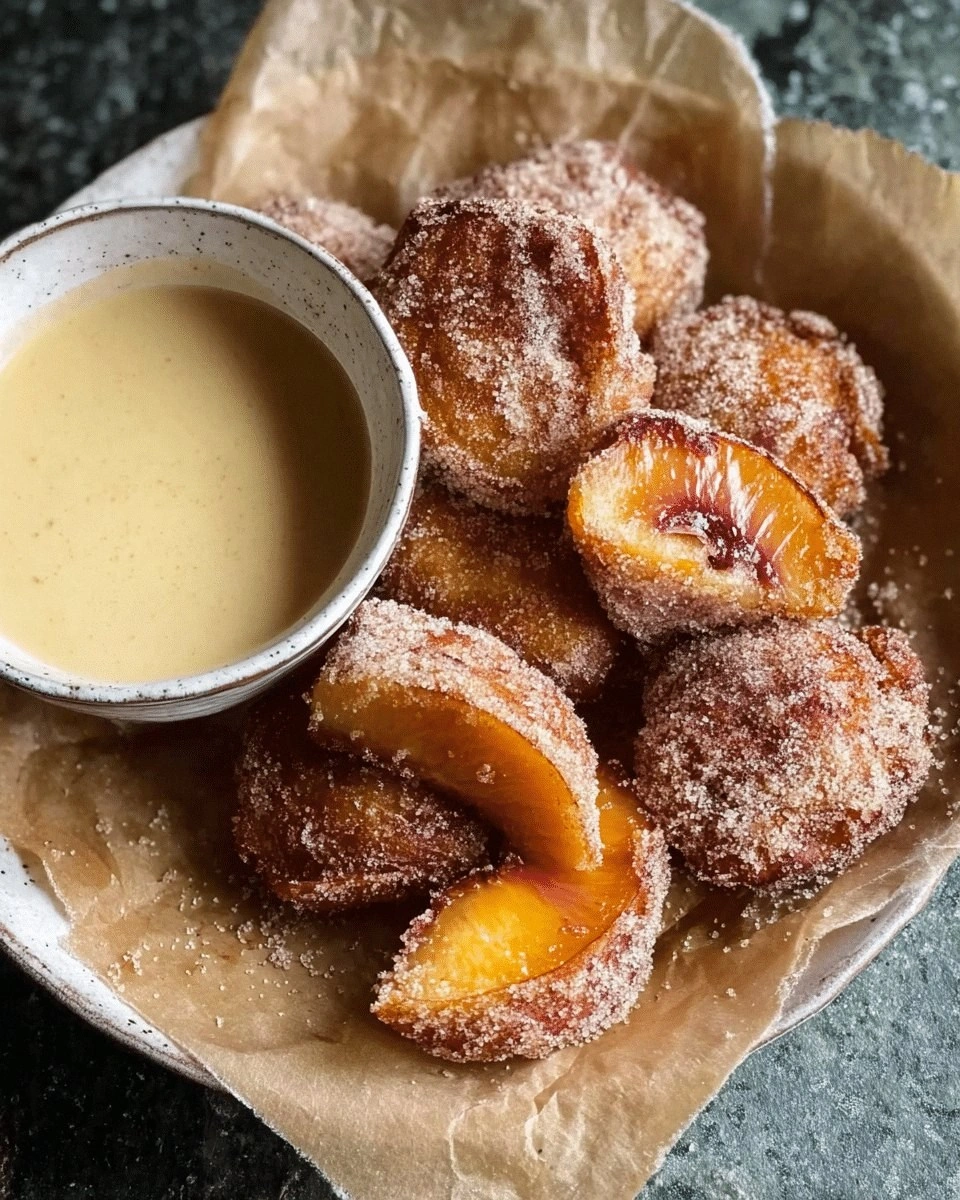
The Method — Step by Step
- Prep the peaches. Slice the peaches into ¼‑inch thick rounds, carefully removing the pits. Pat them dry with a clean towel; moisture is the enemy of a crisp crust. Arrange the slices on a plate and set aside. This step ensures the peaches won’t steam instead of caramelize.
- Make the batter. In a medium bowl, whisk together flour, eggs, milk, butter, salt, pepper, sugar, and vanilla until you have a smooth, glossy mixture. The batter should be thick enough to coat the peaches but not so thick that it clumps. Let it rest for 10 minutes; this relaxes the gluten and improves the texture.
- Toast the sourdough. While the batter rests, slice your sourdough bread into thin squares and toast them in a dry skillet until golden brown on both sides. The toasted crumbs will provide the crunch that balances the juicy peaches. Once toasted, let them cool before crushing into fine crumbs.
- Prepare the crème anglaise. In a small saucepan, combine heavy cream, egg yolks, sugar, and vanilla. Cook over low heat, stirring constantly, until the mixture thickens enough to coat the back of a spoon. Remove from heat and let it cool; the sauce will thicken further as it chills.
- Heat the skillet. Place a large non‑stick skillet over medium heat and add butter. Once the butter has melted and starts to foam, the pan is ready. This step is crucial; too low heat will make the peaches soggy, too high will burn the crust.
- Coat the peaches. Dip each peach slice into the batter, ensuring a generous coating, then roll it in the sourdough crumbs. The crumb coating should be even, but don’t over‑coat or the peaches will become heavy. This is the moment of truth; the crust must be crisp but not burnt.
- Fry the peaches. Place the coated peaches in the hot skillet, leaving enough space between each slice. Fry for 2–3 minutes per side, or until a golden crust forms and the peaches are caramelized. Flip carefully with a spatula to avoid breaking the coating.
- Finish with crème anglaise. Once the peaches are done, drizzle the cooled crème anglaise over the top. The sauce should coat the peaches lightly, adding a silky, sweet finish that balances the buttery crust. Serve immediately, or keep warm in a low oven until ready to serve.
That’s it — you did it. But hold on, I've got a few more tricks that'll take this to another level. From adjusting the heat for the perfect crust to mastering the sauce’s viscosity, these insights will help you refine every bite.
Insider Tricks for Flawless Results
The Temperature Rule Nobody Follows
Many cooks think medium heat is enough, but the secret lies in maintaining a steady 350°F (177°C). Use a kitchen thermometer to monitor the skillet; if the temperature drops, add a splash of oil. This ensures a uniform crust without burning. A friend once tried a lower heat and ended up with soggy peaches; the lesson? Consistent heat is king.
Why Your Nose Knows Best
As the peaches caramelize, the aroma will change from sweet to smoky. Trust that smell; when it starts to smell like toasted bread, you’re ready to flip. The scent is a reliable cue that the crust is crisping correctly, so don’t rush the process. A well‑aroma indicates a perfect balance of sweet and savory.
The 5‑Minute Rest That Changes Everything
After frying, let the peaches rest on a wire rack for five minutes. This allows the excess oil to drain, preventing a greasy finish. It also lets the crust set, making each bite crisp. A quick rest is a simple step that elevates the overall texture.
Keep the Crème Anglaise Silky
When cooling the sauce, cover it with plastic wrap pressed directly onto the surface to prevent a skin from forming. This keeps the sauce smooth and silky. If you need to reheat, do so gently over low heat, stirring constantly. A thick sauce can become clumpy if reheated too quickly.
Serve Immediately, But If Not, Keep Warm
If you’re not serving right away, place the finished peaches in a single layer on a baking sheet and warm them in a 300°F (149°C) oven for 5 minutes. This preserves the crisp crust while keeping the peaches warm. Avoid higher temperatures, or the crust will become brittle.
Creative Twists and Variations
This recipe is a playground. Here are some of my favorite ways to switch things up:
Spicy Peach Surprise
Add a pinch of cayenne pepper to the batter for a subtle heat that pairs wonderfully with the sweetness of the peaches. The pepper’s kick adds a new dimension, making it a conversation starter at dinner parties.
Maple‑Infused Crème
Swap half of the heavy cream in the crème anglaise for maple syrup. The syrup deepens the sauce’s sweetness and adds a caramel undertone, creating a richer flavor profile.
Almond Crunch
Replace the sourdough crumbs with toasted almond slices for an extra crunch and nutty flavor. The almonds complement the peaches and add a delightful texture contrast.
Balsamic Glaze Finish
Drizzle a balsamic reduction over the finished peaches for a sweet‑tart finish that pairs beautifully with the buttery crust. The glaze adds depth and a glossy sheen that makes the dish visually stunning.
Herb‑Infused Peaches
Fold fresh thyme leaves into the batter for a subtle herbal note that balances the peach’s natural sweetness. The thyme adds aromatic complexity and pairs well with the crème anglaise.
Cheese‑Topped Variation
Sprinkle shredded aged cheddar over the peaches before the final drizzle of sauce. The cheese melts into a gooey, savory layer that contrasts the sweet peaches and creates a unique flavor fusion.
Storing and Bringing It Back to Life
Fridge Storage
Store leftover peaches in an airtight container in the refrigerator for up to 2 days. Keep the crème anglaise in a separate container to preserve its silky texture. When ready to serve, reheat the peaches gently in a skillet or oven at 300°F (149°C) for 5 minutes.
Freezer Friendly
For longer storage, freeze the peaches in a single layer on a parchment‑lined tray, then transfer them to a freezer bag once frozen. They’ll keep for up to 3 months. Thaw overnight in the refrigerator before reheating.
Best Reheating Method
Reheat the peaches in a skillet over low heat, adding a splash of water to create steam and keep the crust from becoming too dry. Then finish with a light drizzle of crème anglaise to restore the silky finish. This method keeps the peaches juicy and the crust crisp.