
Korean Kimchi Stew
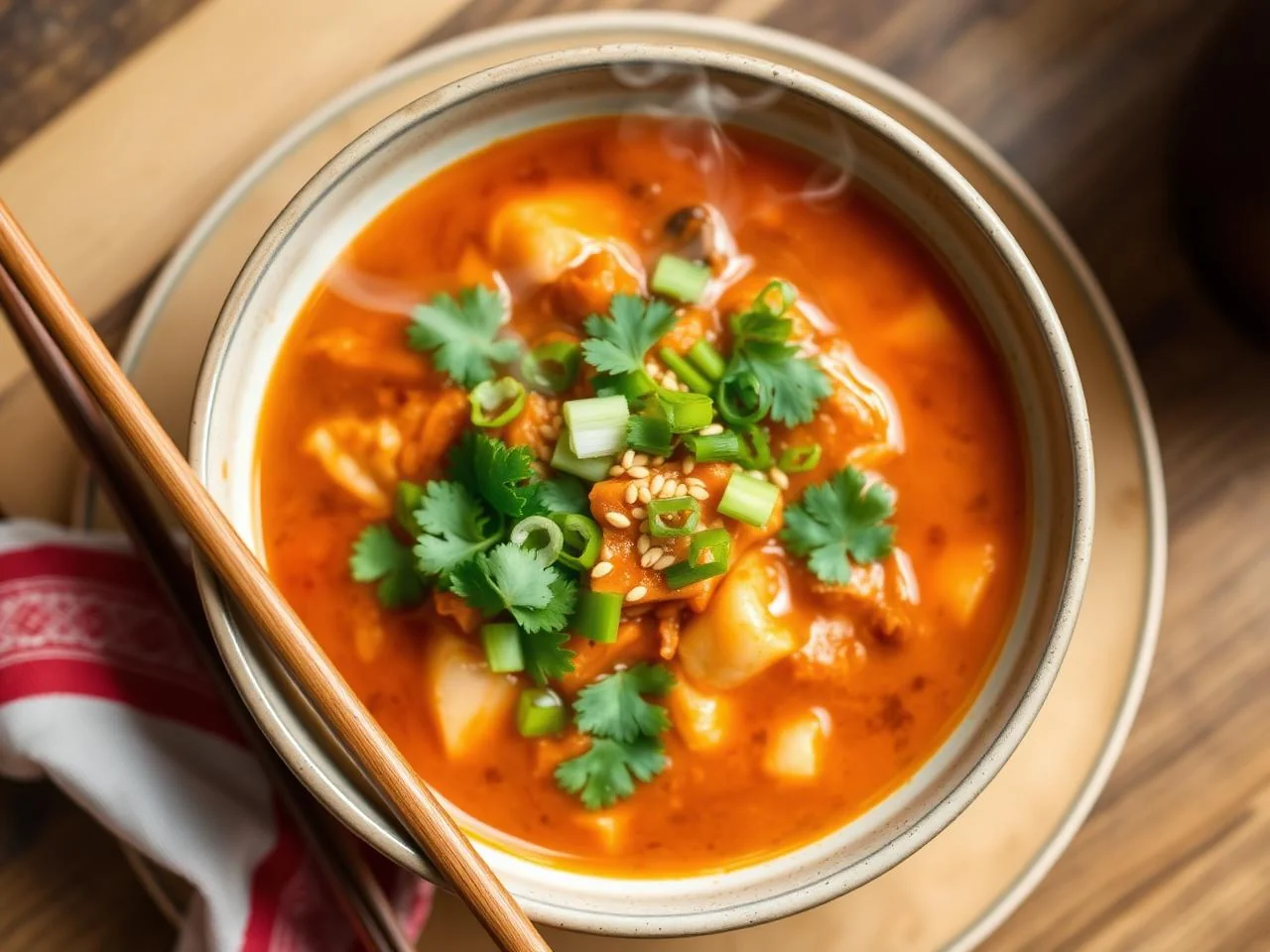
Korean kimchi stew, also known as kimchi jjigae, is a staple in Korean cuisine. It's a hearty, spicy, and sour stew made with kimchi, a traditional Korean side dish made from fermented vegetables, usually cabbage or radishes. I first tried kimchi stew at a Korean restaurant in my hometown, and I was immediately hooked. The combination of the spicy and sour flavors with the richness of the pork and the depth of the Korean chili flakes was like nothing I had ever tasted before.
As I began to experiment with making kimchi stew at home, I realized that it was actually quite easy to make. The key is to use high-quality kimchi that has been fermented for at least a few days, which gives the stew its signature depth of flavor. You can either make your own kimchi from scratch or use store-bought kimchi, whichever is more convenient for you.
This recipe is perfect for anyone who loves spicy food and is looking for a new and exciting dish to add to their repertoire. It's also a great way to use up any leftover kimchi you may have in your fridge. So, let's get started and make a delicious Korean kimchi stew that will warm your belly and your heart.
One of the things I love about kimchi stew is its versatility. You can customize it to your taste by adding your favorite ingredients, such as pork, beef, or tofu, and adjusting the level of spiciness to your liking. You can also serve it with a variety of sides, such as steamed rice, noodles, or kimchi coleslaw, to make it a complete meal.
In this recipe, I'll guide you through the process of making a delicious and authentic Korean kimchi stew. We'll start by preparing the ingredients, including the kimchi, pork, and vegetables, and then we'll move on to cooking the stew and seasoning it to perfection. So, let's get started and make a kimchi stew that will become a staple in your kitchen.
Why You’ll Love This Recipe
- This recipe is easy to make and requires minimal ingredients.
- The stew is spicy and sour, making it perfect for anyone who loves bold flavors.
- You can customize the recipe to your taste by adding your favorite ingredients.
- The stew is hearty and filling, making it perfect for a weeknight dinner or special occasion.
- You can make it ahead of time and refrigerate or freeze it for later use.
- The recipe is budget-friendly and uses affordable ingredients.
- The stew is a great way to use up any leftover kimchi you may have in your fridge.
Why This Recipe Works
The key to making a great kimchi stew is to use a combination of ingredients that provide a balance of flavors and textures. The kimchi provides a spicy and sour flavor, while the pork adds richness and depth. The vegetables, such as the onions and garlic, add a sweetness and aroma that balances out the spiciness of the kimchi.
Another important aspect of making a great kimchi stew is to cook the ingredients in the right order. You want to start by cooking the pork and the onions, which will add a rich and savory flavor to the stew. Then, you add the kimchi and the garlic, which will add a spicy and aromatic flavor. Finally, you add the vegetables and the broth, which will add a light and refreshing flavor to the stew.
The cooking technique is also important in making a great kimchi stew. You want to cook the ingredients over medium-high heat, which will help to bring out the flavors and textures of the ingredients. You also want to stir the stew frequently, which will help to prevent the ingredients from burning or sticking to the bottom of the pot.
Finally, the seasoning is important in making a great kimchi stew. You want to use a combination of soy sauce, Korean chili flakes, and sesame oil to add a deep and complex flavor to the stew. You also want to add a pinch of salt and black pepper to bring out the flavors of the ingredients.
Ingredients You’ll Need
To make a delicious and authentic Korean kimchi stew, you'll need a few key ingredients. These include kimchi, pork, onions, garlic, and Korean chili flakes. You'll also need some vegetables, such as zucchini and carrots, and some broth to add moisture and flavor to the stew.
When shopping for kimchi, look for a brand that is made with high-quality ingredients and has a good balance of spicy and sour flavors. You can also make your own kimchi from scratch, which will give you more control over the flavor and texture.
- 2 cups kimchi, choppedKimchi is a traditional Korean side dish made from fermented vegetables, usually cabbage or radishes. You can use store-bought kimchi or make your own from scratch. Look for a brand that is made with high-quality ingredients and has a good balance of spicy and sour flavors.
- 1 lb (450g) pork shoulder, cut into bite-sized piecesPork shoulder is a great cut of meat for kimchi stew because it's tender and flavorful. You can also use other cuts of pork, such as pork belly or pork loin, but pork shoulder is the most traditional choice.
- 1 large onion, choppedOnions add a sweet and aromatic flavor to the stew. You can use any type of onion, but yellow onions are the most traditional choice.
- 3 cloves garlic, mincedGarlic is a key ingredient in many Korean dishes, including kimchi stew. It adds a pungent and aromatic flavor to the stew.
- 2 medium zucchinis, slicedZucchinis add a light and refreshing flavor to the stew. You can use any type of summer squash, but zucchinis are the most traditional choice.
- 2 medium carrots, peeled and slicedCarrots add a sweet and crunchy texture to the stew. You can use any type of carrot, but orange carrots are the most traditional choice.
- 2 tbsp (30g) Korean chili flakesKorean chili flakes, also known as gochugaru, are a key ingredient in many Korean dishes, including kimchi stew. They add a spicy and smoky flavor to the stew.
- 2 tbsp (30g) soy sauceSoy sauce is a key ingredient in many Korean dishes, including kimchi stew. It adds a salty and umami flavor to the stew.
- 2 tbsp (30g) sesame oilSesame oil is a key ingredient in many Korean dishes, including kimchi stew. It adds a nutty and aromatic flavor to the stew.
- 4 cups (1L) pork brothPork broth is a key ingredient in many Korean dishes, including kimchi stew. It adds a rich and savory flavor to the stew.
- 1 tsp (5g) saltSalt is a key ingredient in many Korean dishes, including kimchi stew. It adds a salty flavor to the stew and helps to bring out the flavors of the other ingredients.
- 1/2 tsp (2g) black pepperBlack pepper is a key ingredient in many Korean dishes, including kimchi stew. It adds a spicy and aromatic flavor to the stew.
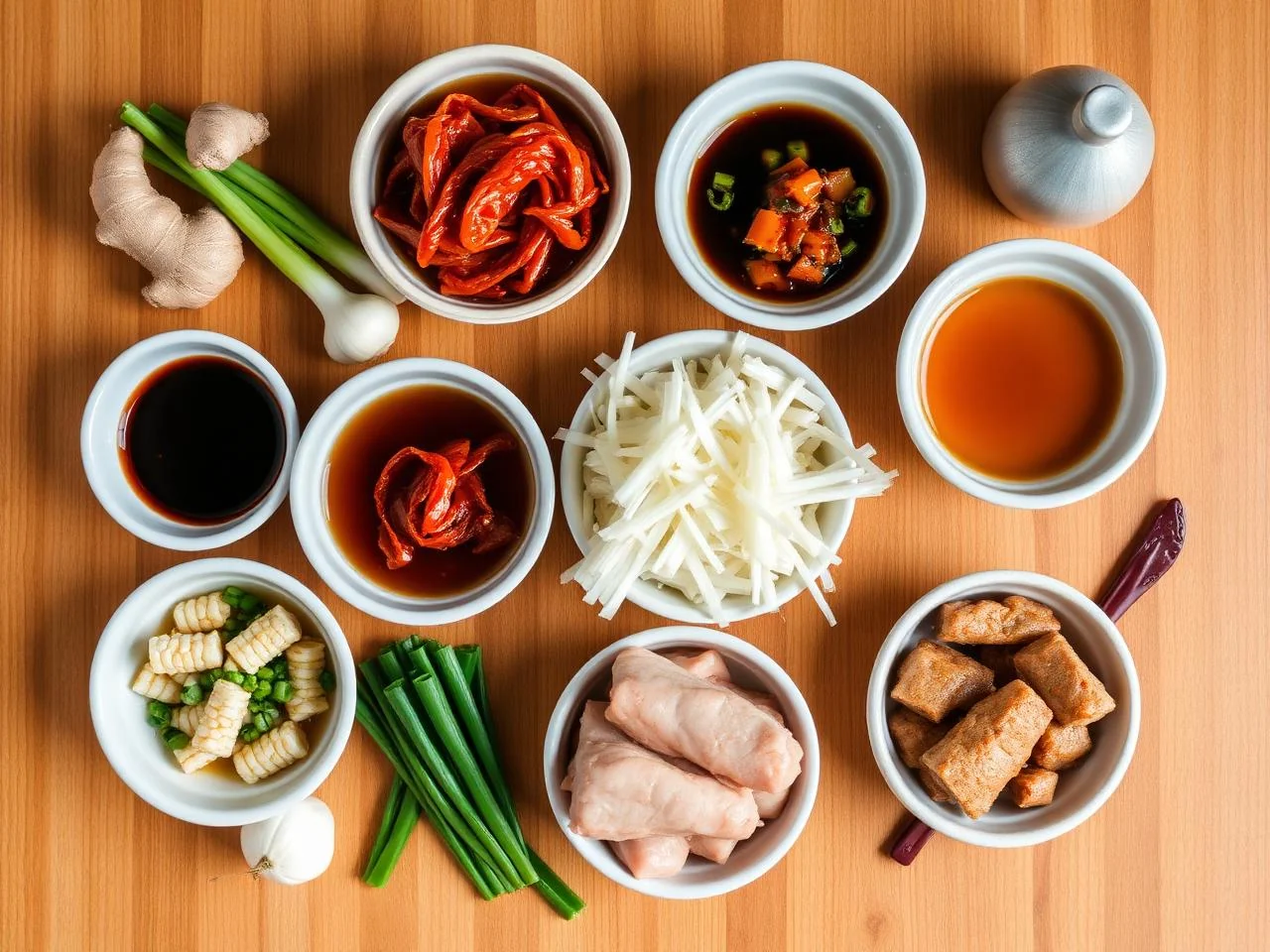
Equipment You’ll Need
How to Make Korean Kimchi Stew
- 1Heat 1 tablespoon of sesame oil in the pot over medium-high heat until it starts to shimmer.
- 2Add the pork to the pot and cook until it is browned on all sides, about 5-7 minutes. Remove the pork from the pot and set it aside.
- 3Add the remaining 1 tablespoon of sesame oil to the pot and cook the onions and garlic until they are softened and fragrant, about 3-5 minutes.
- 4Add the kimchi to the pot and cook until it is slightly caramelized and fragrant, about 5 minutes.
- 5Add the zucchinis and carrots to the pot and cook until they are tender, about 5 minutes.
- 6Add the Korean chili flakes, soy sauce, and pork broth to the pot and stir to combine.
- 7Return the pork to the pot and bring the stew to a boil.
- 8Reduce the heat to medium-low and simmer the stew, covered, until the pork is tender and the flavors have melded together, about 20-25 minutes.
- 9Season the stew with salt and black pepper to taste.
- 10Serve the stew hot, garnished with chopped green onions and a dollop of kimchi, if desired.
Expert Tips
- Use high-quality kimchi that has been fermented for at least a few days to get the best flavor.
- Adjust the level of spiciness to your taste by adding more or less Korean chili flakes.
- Use a variety of vegetables, such as zucchinis and carrots, to add texture and flavor to the stew.
- Cook the stew over medium-high heat to bring out the flavors and textures of the ingredients.
- Stir the stew frequently to prevent the ingredients from burning or sticking to the bottom of the pot.
- Serve the stew with a variety of sides, such as steamed rice or noodles, to make it a complete meal.
- Experiment with different ingredients, such as pork belly or tofu, to add variety to the stew.
- Make the stew ahead of time and refrigerate or freeze it for later use.
Common Mistakes to Avoid
- Not using high-quality kimchi that has been fermented for at least a few days.
- Not adjusting the level of spiciness to your taste.
- Not cooking the stew over medium-high heat to bring out the flavors and textures of the ingredients.
- Not stirring the stew frequently to prevent the ingredients from burning or sticking to the bottom of the pot.
- Not serving the stew with a variety of sides, such as steamed rice or noodles, to make it a complete meal.
- Not experimenting with different ingredients, such as pork belly or tofu, to add variety to the stew.
Variations and Substitutions
- Add pork belly or tofu to the stew for added protein and flavor.
- Use different types of vegetables, such as mushrooms or bell peppers, to add texture and flavor to the stew.
- Add a variety of spices, such as cumin or coriander, to add depth and complexity to the stew.
- Use different types of broth, such as chicken or beef broth, to add a rich and savory flavor to the stew.
- Serve the stew with a variety of sides, such as kimchi coleslaw or steamed bok choy, to make it a complete meal.
- Make the stew ahead of time and refrigerate or freeze it for later use.
- Experiment with different types of kimchi, such as radish kimchi or cucumber kimchi, to add variety to the stew.
What to Serve With Korean Kimchi Stew
Korean kimchi stew is a hearty and flavorful dish that can be served with a variety of sides to make it a complete meal. Some popular options include steamed rice, noodles, or kimchi coleslaw. You can also serve the stew with a variety of vegetables, such as steamed bok choy or sautéed spinach, to add some extra nutrients and flavor to the dish.
One of the best things about kimchi stew is its versatility. You can serve it as a main dish, or as a side dish to accompany other Korean dishes, such as bibimbap or bulgogi. You can also experiment with different ingredients and sides to add variety to the stew and make it your own.
Make-Ahead, Storage, Freezing and Reheating
Korean kimchi stew can be made ahead of time and refrigerated or frozen for later use. To refrigerate the stew, let it cool to room temperature, then transfer it to an airtight container and store it in the refrigerator for up to 3 days. To freeze the stew, let it cool to room temperature, then transfer it to an airtight container or freezer bag and store it in the freezer for up to 3 months.
To reheat the stew, simply thaw it overnight in the refrigerator, then reheat it over medium heat, stirring frequently, until it is hot and bubbly. You can also reheat the stew in the microwave, but be careful not to overheat it, as this can cause the flavors to become unbalanced.
One of the best things about kimchi stew is its ability to be reheated and served again and again without losing its flavor or texture. This makes it a great option for meal prep or for cooking for a crowd. Simply make a large batch of the stew, then reheat it as needed, and serve it with a variety of sides to make it a complete meal.
In addition to refrigerating or freezing the stew, you can also can it using a pressure canner. This will allow you to store the stew for up to 5 years, and it will retain its flavor and texture. However, this method requires some special equipment and knowledge, so be sure to follow a tested recipe and instructions carefully.
Frequently Asked Questions
What is kimchi?
Kimchi is a traditional Korean side dish made from fermented vegetables, usually cabbage or radishes. It is spicy, sour, and umami, and is a key ingredient in many Korean dishes, including kimchi stew.
How do I make kimchi?
To make kimchi, you will need to ferment a mixture of vegetables, usually cabbage or radishes, with a variety of seasonings, including Korean chili flakes, garlic, and fish sauce. The fermentation process can take several days, and the kimchi will be ready when it is sour and slightly effervescent.
What is the difference between kimchi and sauerkraut?
Kimchi and sauerkraut are both fermented vegetable dishes, but they have some key differences. Kimchi is typically made with Korean chili flakes, garlic, and fish sauce, which give it a spicy and umami flavor. Sauerkraut, on the other hand, is made with cabbage and salt, and has a milder flavor.
Can I use different types of kimchi in the stew?
Yes, you can use different types of kimchi in the stew, such as radish kimchi or cucumber kimchi. However, traditional kimchi made with cabbage is the most common and popular type of kimchi to use in the stew.
How do I store kimchi?
Kimchi can be stored in the refrigerator, where it will keep for several weeks. It can also be frozen, where it will keep for several months. To store kimchi, simply transfer it to an airtight container and keep it in the refrigerator or freezer.
Can I make the stew ahead of time?
Yes, you can make the stew ahead of time and refrigerate or freeze it for later use. Simply let the stew cool to room temperature, then transfer it to an airtight container and store it in the refrigerator or freezer.
How do I reheat the stew?
To reheat the stew, simply thaw it overnight in the refrigerator, then reheat it over medium heat, stirring frequently, until it is hot and bubbly. You can also reheat the stew in the microwave, but be careful not to overheat it, as this can cause the flavors to become unbalanced.
Can I serve the stew with different sides?
Yes, you can serve the stew with a variety of sides, such as steamed rice, noodles, or kimchi coleslaw. You can also experiment with different ingredients and sides to add variety to the stew and make it your own.
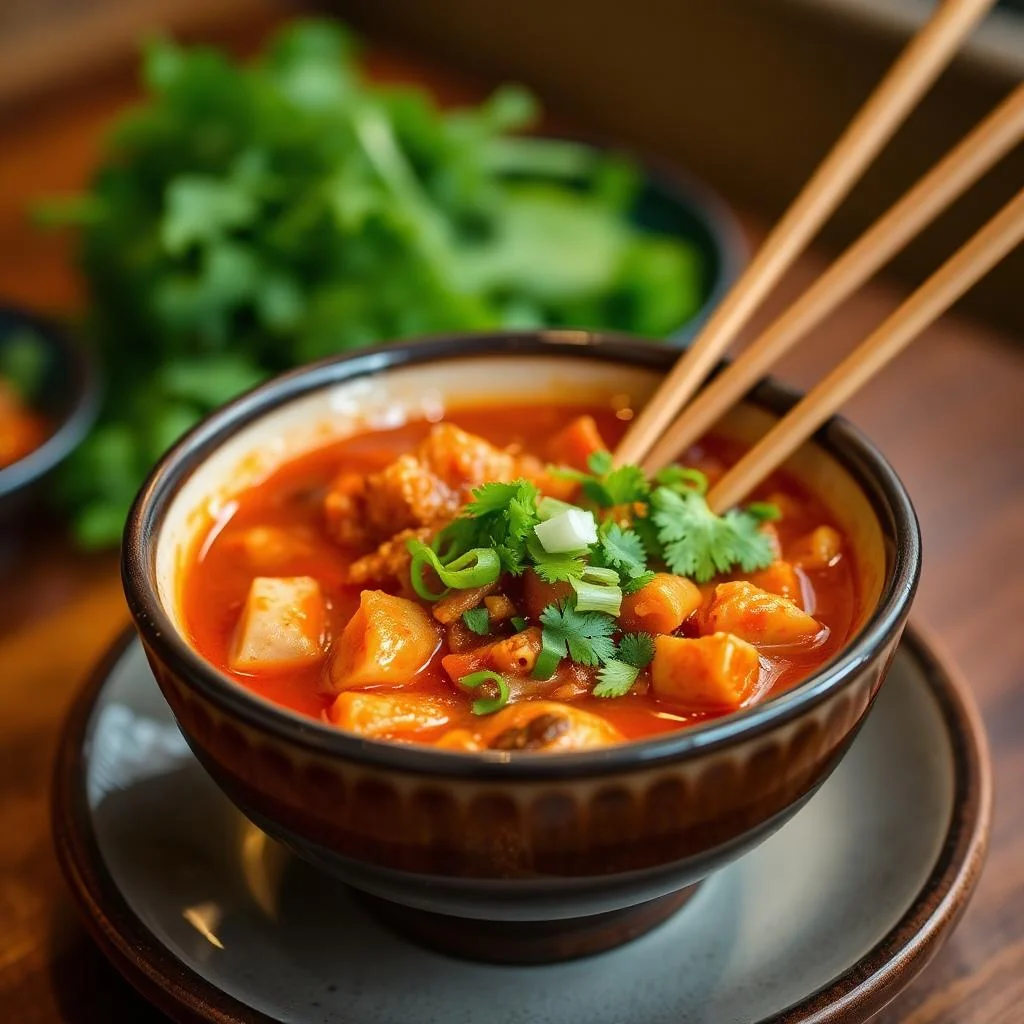
Ingredients
- 2 cups kimchi, chopped
- 1 lb (450g) pork shoulder, cut into bite-sized pieces
- 1 large onion, chopped
- 3 cloves garlic, minced
- 2 medium zucchinis, sliced
- 2 medium carrots, peeled and sliced
- 2 tbsp (30g) Korean chili flakes
- 2 tbsp (30g) soy sauce
- 2 tbsp (30g) sesame oil
- 4 cups (1L) pork broth
- 1 tsp (5g) salt
- 1/2 tsp (2g) black pepper
Instructions
- Heat 1 tablespoon of sesame oil in the pot over medium-high heat until it starts to shimmer.
- Add the pork to the pot and cook until it is browned on all sides, about 5-7 minutes. Remove the pork from the pot and set it aside.
- Add the remaining 1 tablespoon of sesame oil to the pot and cook the onions and garlic until they are softened and fragrant, about 3-5 minutes.
- Add the kimchi to the pot and cook until it is slightly caramelized and fragrant, about 5 minutes.
- Add the zucchinis and carrots to the pot and cook until they are tender, about 5 minutes.
- Add the Korean chili flakes, soy sauce, and pork broth to the pot and stir to combine.
- Return the pork to the pot and bring the stew to a boil.
- Reduce the heat to medium-low and simmer the stew, covered, until the pork is tender and the flavors have melded together, about 20-25 minutes.
- Season the stew with salt and black pepper to taste.
- Serve the stew hot, garnished with chopped green onions and a dollop of kimchi, if desired.