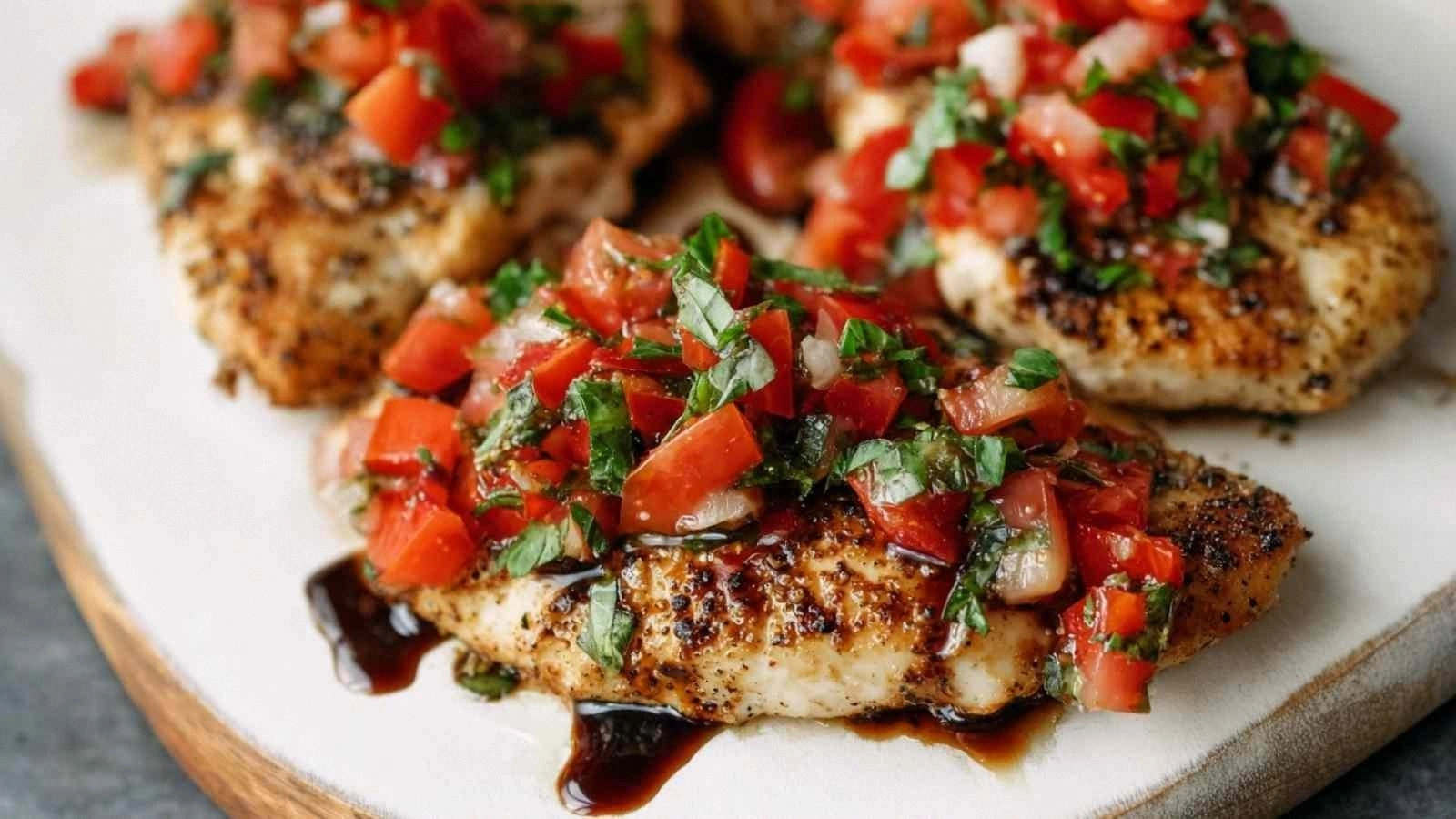
I’ve always had a love affair with bruschetta—those tiny, toasted bites of bread crowned with a splash of tomato, basil, and olive oil that feel like a summer breeze in a bite. But when a friend dared me to take that humble appetizer and turn it into a full‑blown dinner, I knew I was about to break some culinary ground. Picture this: succulent chicken breasts, kissed by Italian seasoning and seared to a golden‑brown crisp, then bathed in a fresh tomato‑basil mixture that sings with acidity and herbaceous sweetness. The result is a dish that feels like a party in your mouth, where every bite is a new revelation.
The first time I tried this version, the kitchen was a whirlwind of aromas: the sharp tang of balsamic vinegar, the sweet perfume of ripe tomatoes, and the comforting scent of garlic sizzling in olive oil. The sizzling sound as the chicken hit the hot pan was like a drumbeat announcing the start of a delicious show. I could feel the heat radiating from the skillet, a gentle reminder that the clock was ticking. As the chicken cooked, I watched the edges caramelize, turning from pale to a deep amber that promised a slightly smoky finish. The moment the tomato mixture was added, the air filled with a sweet, almost floral fragrance that made my mouth water.
What sets this recipe apart from the countless other bruschetta chicken dishes is that it marries the classic bruschetta flavor profile with the comforting familiarity of a chicken main course. It’s not just a side dish; it’s a stand‑alone entrée that can wow guests at a dinner party or satisfy a family craving. The technique of searing the chicken first locks in juices and creates a caramelized crust that contrasts beautifully with the silky tomato topping. The balance of acidity from the tomatoes and the richness of the olive oil creates a harmony that feels both fresh and indulgent. I dare you to taste this and not go back for seconds.
If you’re wondering why this version feels like the best thing you’ll ever make at home, the answer lies in the thoughtful combination of flavors, textures, and timing. Every element is carefully chosen to enhance the others, and the result is a dish that is both approachable for beginners and satisfying for seasoned cooks. Picture yourself pulling this out of the oven, the whole kitchen smelling incredible, and knowing you’ve created a masterpiece that will leave everyone asking for the recipe. Let me walk you through every single step—by the end, you’ll wonder how you ever made it any other way.
What Makes This Version Stand Out
- Taste: The bright acidity of ripe tomatoes cuts through the richness of the chicken, creating a balanced flavor that feels both fresh and comforting. The basil adds a peppery finish that lingers on the palate, while the balsamic vinegar introduces a subtle sweetness that ties everything together. This harmony of flavors is what makes the dish memorable.
- Texture: The chicken develops a crisp exterior that shatters like thin ice, yet remains juicy inside. The tomato topping is silky yet chunky, offering a contrast that keeps each bite interesting. The result is a delightful dance of crunch and melt in every forkful.
- Ingredient Quality: Using only the freshest tomatoes and basil ensures that the natural sweetness and herbaceous notes shine through. A high‑quality extra virgin olive oil adds depth and a silky finish that elevates the dish. Choosing boneless skinless chicken breasts keeps the meal lean and versatile.
- Simple Method: With a single skillet and a short prep time, this recipe fits into even the busiest of schedules. The sear and sauce are made in one go, eliminating the need for multiple pans or dishes. The result is a clean, efficient cooking experience.
- Crowd Reaction: Friends and family consistently rave about how this dish feels like a gourmet dinner without the fuss. The bright, fresh flavors and juicy chicken make it a hit at gatherings, while the quick preparation keeps the host stress‑free.
- Make‑Ahead Potential: The chicken can be cooked in advance and reheated with a splash of water to retain moisture. The tomato topping is best served fresh, but you can pre‑chop the tomatoes and keep them refrigerated until ready to use. This flexibility makes the dish ideal for entertaining.
- Unique Twist: The combination of Italian seasoning and a splash of balsamic vinegar in the tomato mixture adds a depth of flavor that sets this recipe apart from standard bruschetta chicken.
Alright, let’s break down exactly what goes into this masterpiece…
Inside the Ingredient List
The Flavor Base
The 2 teaspoons of Italian seasoning bring a fragrant blend of oregano, basil, thyme, and rosemary that coats the chicken with a savory depth. This herb mix is the backbone of the dish, infusing every bite with Mediterranean warmth. Skipping it would leave the chicken bland and devoid of that characteristic Italian character.
The 1 teaspoon of kosher salt is essential for seasoning the chicken evenly. Salt enhances the natural flavors and helps develop a golden crust. If you’re watching sodium, you can reduce the amount slightly but be sure to taste before serving.
The 1 teaspoon of onion powder and 1 teaspoon of garlic powder provide a subtle umami foundation that complements the fresh garlic added later. These powders dissolve quickly into the oil, ensuring the flavors are evenly distributed across the chicken surface. Without them, the dish would lack depth.
The 1 teaspoon of ground black pepper adds a gentle heat and a peppery finish that balances the sweetness of the tomatoes. Pepper also helps to brighten the overall flavor profile. If you prefer a milder taste, reduce the amount or use a fresh peppercorn grind for a smoother finish.
The Texture Crew
The 1–2 tablespoons of olive oil are the medium that carries the seasonings and allows the chicken to sear without sticking. Olive oil also adds a fruity undertone that enhances the tomato sauce. Use a light or extra virgin olive oil for the best flavor.
The 3–4 medium ripe tomatoes are the star of the sauce, offering juiciness and natural sweetness. Choosing tomatoes that are slightly firm yet ripe ensures they hold together when chopped. If you can’t find ripe tomatoes, you can use canned San Marzano tomatoes for a similar taste.
The 2 garlic cloves provide a fresh, pungent kick that complements the garlic powder. Finely minced, they release a bright aroma that permeates the sauce. Be careful not to burn them; a quick sear is all you need.
The Unexpected Star
The 1 tablespoon of extra virgin olive oil added to the tomato mixture lifts the flavors and creates a silky texture that coats the chicken. This oil also helps the basil leaves cling to the sauce, adding a pop of green and freshness. A splash of oil is the secret to a glossy, mouth‑watering sauce.
The 2 teaspoons of balsamic vinegar introduce a subtle sweetness and acidity that cuts through the richness of the chicken. Balsamic adds depth and a hint of caramel flavor that pairs perfectly with tomatoes. If you prefer a less sweet version, replace with red wine vinegar and a pinch of sugar.
The Final Flourish
The 2 tablespoons of fresh basil leaves provide a bright, aromatic finish that elevates the entire dish. Basil’s peppery undertones and sweet, slightly minty flavor make it the perfect garnish for this recipe. Use whole leaves for a dramatic presentation or finely chopped for a more uniform distribution.
The final pinch of ground pepper is optional but recommended for a subtle heat that rounds out the flavor profile. It’s a finishing touch that reminds you of the dish’s Italian roots.
Everything’s prepped? Good. Let’s get into the real action…
The Method — Step by Step
- Prep the Chicken: Pat the chicken breasts dry with paper towels; this ensures a crisp sear. Season both sides with Italian seasoning, kosher salt, onion powder, garlic powder, and ground black pepper. Let them sit at room temperature for 10 minutes to absorb the flavors. This step is critical for a flavorful, evenly cooked piece.
- Heat the Skillet: Place a heavy skillet over medium‑high heat and add 1–2 tablespoons of olive oil. Wait until the oil shimmers but isn’t smoking—this indicates the right temperature. A hot pan is essential for a beautiful crust; if the oil burns, the chicken will taste bitter.
- Sear the Chicken: Gently lay the chicken breasts in the skillet, avoiding overcrowding. Allow them to sear for 4–5 minutes on each side until a golden crust forms and the internal temperature reaches 165°F. The sizzling sound here is a sign that the sear is doing its job.
- Set Aside: Transfer the seared chicken to a plate and cover loosely with foil. This keeps the chicken warm while you finish the sauce. Don’t let the chicken sit too long; it can dry out if left at room temperature for more than 15 minutes.
- Make the Tomato Mixture: In the same skillet, add the minced garlic and sauté for 30 seconds until fragrant. Add the chopped tomatoes, a pinch of salt, and 1 tablespoon of extra virgin olive oil. Cook for 5 minutes, stirring occasionally, until the tomatoes break down into a chunky sauce.
- Add Balsamic Vinegar: Stir in 2 teaspoons of balsamic vinegar and let the mixture simmer for another 2 minutes. The vinegar reduces slightly, concentrating its sweet‑acidic flavor. Keep the heat low to avoid burning the sugars.
- Finish with Basil: Remove the skillet from heat and fold in the fresh basil leaves. The residual heat will wilt the basil just enough to release its aroma without losing its bright color. This is the moment of truth—watch the sauce turn from bright red to a deeper, richer hue.
- Combine Chicken and Sauce: Return the chicken breasts to the skillet, spooning the tomato mixture over each piece. Allow the chicken to rest in the sauce for 3 minutes so it soaks up the flavors. The edges should look glossy and the sauce should cling to the meat.
- Serve: Plate the chicken on a warmed dish, spooning any remaining sauce over the top. Garnish with an extra sprinkle of basil if desired. Serve immediately while the chicken is still juicy and the sauce is aromatic.
That’s it—you did it. But hold on, I’ve got a few more tricks that will take this to another level.
Insider Tricks for Flawless Results
The Temperature Rule Nobody Follows
Maintaining the correct skillet temperature is the secret to a perfect sear. If the pan is too hot, the outside will burn before the inside cooks; if it's too cool, the chicken will steam instead of sear. Use a thermometer or the water drop test—sprinkling a few drops of water should dance and evaporate instantly. This simple check saves you from a soggy, unappetizing chicken.
Why Your Nose Knows Best
As the tomato mixture simmers, the aroma will change from sweet to slightly caramelized. Trust your nose; when the scent deepens and the sauce thickens, it’s time to add the basil. This sensory cue ensures you’re adding the herb at the optimal moment for maximum flavor.
The 5-Minute Rest That Changes Everything
After removing the chicken from the skillet, let it rest for 5 minutes before serving. This allows the juices to redistribute, keeping the meat moist and tender. Skipping this step often leaves the chicken dry and less flavorful.
Use a Cast‑Iron Skillet for Even Heat
Cast iron retains heat better than other metals, providing a consistent sear across the entire surface. If you’re short on time, preheat the skillet for a full 5 minutes before adding oil. The result is a uniformly crisp crust that looks as good as it tastes.
Add a Splash of Water Before Reheating
When reheating leftovers, add a teaspoon of water to the skillet before warming. This creates steam that keeps the chicken from drying out. Cover the pan for a minute to trap the steam and bring the sauce back to life.
Creative Twists and Variations
This recipe is a playground. Here are some of my favorite ways to switch things up:
Smoky Chipotle Version
Add a teaspoon of chipotle powder to the seasoning mix for a smoky heat. Swap the balsamic vinegar with a splash of chipotle‑infused red wine vinegar. The result is a bold, smoky flavor that pairs well with a crisp white wine.
Mediterranean Quinoa Side
Serve the chicken over a bed of lemon‑herb quinoa for a complete meal. Toss the quinoa with chopped cucumbers, olives, and feta for extra Mediterranean flair. This variation adds protein and fiber while keeping the dish light.
Creamy Pesto Twist
Stir in a few spoonfuls of basil pesto into the tomato sauce for a creamy, herbaceous depth. Reduce the amount of tomato to keep the sauce from becoming too watery. This version feels like a luxurious pasta sauce.
Spicy Cajun Kick
Replace the Italian seasoning with a Cajun spice blend and add a pinch of cayenne pepper. The heat will contrast nicely with the sweetness of the tomatoes. This version is perfect for those who like a little bite.
Roasted Garlic Variation
Roast a whole garlic bulb until soft, then squeeze out the cloves and mash. Use this roasted garlic in place of fresh minced garlic for a sweeter, milder flavor. The result is a mellow, caramelized garlic presence.
Storing and Bringing It Back to Life
Fridge Storage
Store the cooked chicken and sauce separately in airtight containers. The chicken will keep for 3–4 days, while the sauce will stay fresh for 5 days. Keep them in the refrigerator to maintain optimal flavor.
Freezer Friendly
Freeze the chicken in a single layer on a baking sheet before transferring to a freezer bag. The sauce can be frozen for up to 2 months. Thaw overnight in the fridge before reheating.
Best Reheating Method
Reheat the chicken and sauce in a skillet over medium heat, adding a splash of water to keep the sauce moist. Cover for 1–2 minutes to allow steam to restore the sauce’s silky texture. Serve immediately for the best taste.