I was standing in my kitchen, staring at a stubborn, unripe eggplant that looked like a lump of charcoal, when my friend dared me to turn it into something spectacular. The challenge was simple: roast the eggplant until it was tender and caramelized, then marry it with bright cherry tomatoes and a fluffy couscous base. I thought, “Why not?” The moment the oven timer chimed, the kitchen filled with a smoky, almost sweet scent that made my mouth water.
The eggplant, once sliced, released a faint earthy aroma that mingled with the sweet perfume of tomatoes. The sound of the oven’s whirring was punctuated by the gentle pop of tomatoes as they burst into juicy pockets. When I first tasted the roasted mixture, the caramelized edges offered a subtle crunch, while the interior melted into a velvety softness that kissed my tongue. The tang of lemon juice cut through the richness, leaving a bright, citrusy finish that lingered.
What sets this recipe apart is the harmony of textures and the depth of flavor that comes from simple, high‑quality ingredients. The eggplant’s smoky sweetness pairs with the tomatoes’ natural acidity, and the couscous acts as a neutral canvas that absorbs every nuance. A sprinkle of toasted pine nuts adds a nutty crunch that contrasts with the silky sauce, while fresh thyme and a dash of chili flakes inject a warm, aromatic lift. This is not just a dish; it’s a sensory journey that feels like a comforting hug from the Mediterranean.
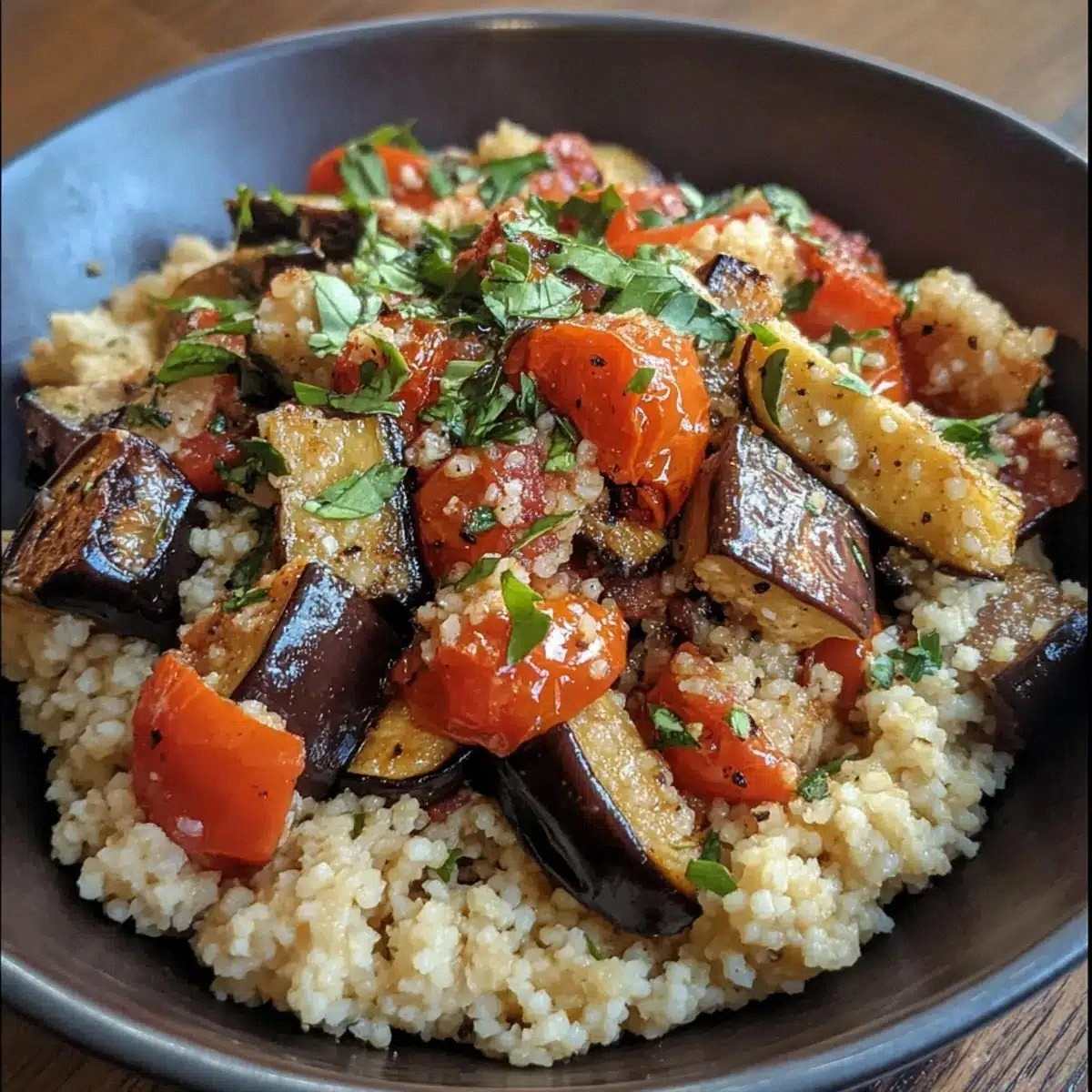
And here’s the kicker: I added a splash of lemon juice right before serving, which brightened the entire dish and made the flavors pop like fireworks. The result is a dish that looks as stunning as it tastes, with glossy roasted vegetables glistening against a bed of fluffy couscous. I dare you to taste this and not go back for seconds. Let me walk you through every single step — by the end, you’ll wonder how you ever made it any other way.
What Makes This Version Stand Out
- Flavor: The caramelized eggplant and sweet cherry tomatoes create a rich, smoky-sweet base that feels like a Mediterranean sunset on a plate.
- Texture: The couscous stays fluffy, while the roasted vegetables develop a slight char that adds a satisfying bite.
- Freshness: Fresh thyme and parsley bring a bright, herbal note that cuts through the richness without overpowering.
- Heat: A pinch of red chili flakes gives a gentle kick that lingers in the aftertaste.
- Crunch: Toasted pine nuts add a nutty crunch that elevates every bite.
- Versatility: The dish works as a main course, side dish, or even a hearty salad.
- Time: With a prep time of 15 minutes and a cook time of 30 minutes, it’s a quick weeknight winner.
- Make‑ahead: The flavors deepen when the dish sits for an hour, making it perfect for meal prep.
Alright, let’s break down exactly what goes into this masterpiece…
Inside the Ingredient List
The Flavor Base
The eggplant is the star of this dish, and its subtle, slightly bitter flavor is amplified when roasted. By cutting it into thick slices and letting it rest under a pinch of salt for 15 minutes, you draw out excess moisture, ensuring a caramelized exterior that’s almost buttery. If you skip the salt step, the eggplant will release too much water and end up soggy, dulling the caramelization.
Cherry tomatoes bring a burst of natural sweetness and acidity that balances the eggplant’s earthiness. Their small size allows them to burst in the oven, releasing juices that mingle with the olive oil and herbs. If you use larger tomatoes, they’ll take longer to soften and may not burst as fully, resulting in a less vibrant sauce.
Olive oil is the vehicle that carries the flavors and helps the vegetables brown. A high‑quality extra‑virgin olive oil imparts a peppery note that complements the thyme. If you use a neutral oil, the dish will lose that characteristic Mediterranean depth.
Garlic, thyme, and red chili flakes are the aromatic backbone. The garlic infuses a warm, savory undertone, while thyme adds a subtle piney freshness. The chili flakes provide a gentle heat that lingers without overwhelming. Skipping any of these will leave the dish feeling flat and one‑dimensional.
Lemon juice is the bright counterpoint that cuts through the richness. Adding it just before serving brightens the entire plate, giving it a fresh, citrusy lift that keeps the palate clean. If you omit the lemon, the dish may taste heavy and lacking brightness.
The Texture Crew
Couscous is the perfect neutral base that soaks up the roasted juices, creating a fluffy, grainy texture that’s both comforting and light. By using a 1:1 ratio of couscous to vegetable broth, you achieve a moist, yet dry‑free consistency that holds its shape. If you use too much broth, the couscous will become mushy and lose its bite.
Vegetable broth not only cooks the couscous but also infuses it with savory depth. A homemade or low‑sodium broth gives the dish an extra layer of flavor. If you use plain water, the couscous will taste bland and fail to carry the roasted flavors.
Pine nuts add a nutty crunch that contrasts with the tender vegetables and the soft couscous. Toasting them beforehand brings out their natural oils, creating a buttery, caramelized taste. Skipping the pine nuts removes that textural contrast and the subtle nutty flavor that rounds out the dish.
The Unexpected Star
Fresh parsley is the final flourish that adds a pop of color and a clean, herbaceous finish. Its bright green hue makes the dish visually appealing, and its mild peppery taste lifts the overall profile. If you leave parsley out, the dish will feel slightly flat and less vibrant.
The Final Flourish
Salt and pepper are the fine-tuners that bring all the flavors together. Salt enhances the sweetness of the tomatoes and the depth of the roasted eggplant, while pepper adds a subtle heat. Using too little salt can leave the dish tasting flat, and too much can overpower the delicate balance.
Everything's prepped? Good. Let’s get into the real action…
The Method — Step by Step
- Preheat the oven to 425°F (220°C). The high heat is essential for caramelizing the eggplant and tomatoes. Place a baking sheet in the middle rack to ensure even roasting. I always line it with parchment for easy cleanup, but a silicone mat works just as well.
- Slice the eggplant into 1/2‑inch thick rounds. Sprinkle each side with a pinch of salt and let them sit for 15 minutes to draw out moisture. Pat the slices dry with a paper towel—this step prevents steaming and ensures crisp edges. After drying, toss them in a bowl with olive oil, minced garlic, thyme, and chili flakes. The garlic will caramelize slightly, adding a sweet depth that’s hard to resist.
Kitchen Hack: If you’re short on time, dice the eggplant into smaller cubes for faster roasting.
- Spread the seasoned eggplant slices on a single layer on the baking sheet. Place the cherry tomatoes around them. The tomatoes will release juices that mingle with the eggplant, creating a self‑saucing effect. Roast for 25 minutes, turning once halfway through, until the eggplant is tender and edges are slightly charred. The aroma at this point is intoxicating, filling the kitchen with a smoky, sweet perfume that makes you want to taste immediately.
- While the vegetables roast, bring 1 cup of vegetable broth to a rolling boil in a small saucepan. Stir in the couscous, remove from heat, cover, and let it steam for 10 minutes. Fluff with a fork to separate the grains. This quick step ensures the couscous is fluffy and ready to absorb the roasted juices.
Kitchen Hack: Cover the baking sheet with foil for the first 15 minutes to lock in moisture, then remove to crisp the edges.
- Remove the roasted vegetables from the oven and let them cool for a minute or two. In a large bowl, combine the couscous with the hot vegetables, tossing gently to coat. The residual heat will steam the couscous further, creating a silky sauce that clings to each grain. Add the toasted pine nuts, a splash of lemon juice, and a handful of chopped parsley. This final mix brings brightness and a crunchy contrast that makes each bite exciting.
- Taste and adjust seasoning with salt and pepper. If you prefer a bit more heat, sprinkle an extra pinch of chili flakes.
Watch Out: If you leave the couscous uncovered, it will dry out and become hard. Cover tightly with foil or a lid.
- Serve immediately while the dish is still warm. The contrast between the hot roasted vegetables and the cool, fluffy couscous is a treat. Garnish with a few extra pine nuts and a drizzle of olive oil for an extra layer of richness.
Kitchen Hack: For a smoky twist, finish the dish under a broiler for 2 minutes to caramelize the top.
That’s it — you did it. But hold on, I’ve got a few more tricks that’ll take this to another level…
Insider Tricks for Flawless Results
The Temperature Rule Nobody Follows
Preheat the oven to 425°F (220°C) before placing the sheet. A preheated oven guarantees even caramelization and a crisp exterior. If you wait until the vegetables are on the tray, the heat will drop, resulting in uneven roasting.
Why Your Nose Knows Best
During roasting, trust the scent. When the eggplant releases a nutty aroma and the tomatoes begin to caramelize, you’re at the peak. If you wait too long, the vegetables may burn and the dish will taste bitter.
The 5-Minute Rest That Changes Everything
Let the roasted vegetables rest for 5 minutes after removing them from the oven. This short pause allows the juices to redistribute, making the sauce richer and the texture more cohesive. A friend once skipped this step and ended up with a dry, uneven mixture.
The Perfect Salt Balance
Start with a pinch of salt when salting the eggplant and add more at the end. Salt draws moisture early but can become overpowering if added all at once. Adjusting gradually ensures a balanced flavor profile.
Using Fresh vs. Dried Herbs
Fresh thyme offers a brighter, more vibrant flavor compared to dried. If you only have dried thyme, reduce the amount by half to avoid bitterness. A friend tried this once and found the dish too sharp.
Reheating Like a Pro
When reheating leftovers, sprinkle a splash of water over the dish and cover with foil. This steams the dish back to life, preventing it from drying out. The result is a silky sauce that feels freshly roasted.
Creative Twists and Variations
Spicy Cajun Kick
Swap the thyme for Cajun seasoning and add a tablespoon of smoked paprika. The result is a smoky, spicy version that pairs wonderfully with a side of cornbread. Fans of bold flavors will love this twist.
Herb‑Infused Couscous
Stir in chopped basil and oregano into the couscous before tossing. The fresh herbs bring a bright, green note that elevates the dish. Great for a springtime meal.
Vegan Protein Boost
Add a handful of chickpeas to the roasted mix for extra protein. The chickpeas absorb the juices and add a pleasant bite. This version is hearty and satisfying.
Breakfast‑Style Eggplant
Serve the dish over a bed of scrambled eggs and sprinkle with chives. The combination creates a savory breakfast that’s both filling and flavorful. Ideal for a weekend brunch.
Gluten‑Free Swap
Use quinoa instead of couscous for a gluten‑free alternative. The quinoa’s nutty flavor complements the roasted vegetables beautifully. Perfect for those avoiding gluten.
Sweet & Smoky Finale
Finish the dish with a drizzle of honey and a pinch of smoked sea salt. The honey adds a subtle sweetness that balances the smoky flavors. This sweet twist is a crowd‑pleaser.
Storing and Bringing It Back to Life
Fridge Storage
Store leftovers in an airtight container in the refrigerator for up to 3 days. The dish’s moist texture stays intact, and the flavors meld even further.
Freezer Friendly
Freeze portions in freezer‑safe containers for up to 2 months. When ready, thaw overnight in the fridge and reheat gently.
Best Reheating Method
Reheat on the stovetop over medium heat, adding a splash of water and covering to steam. This method preserves the sauce’s silkiness and prevents drying out. A quick stir ensures even heat distribution.