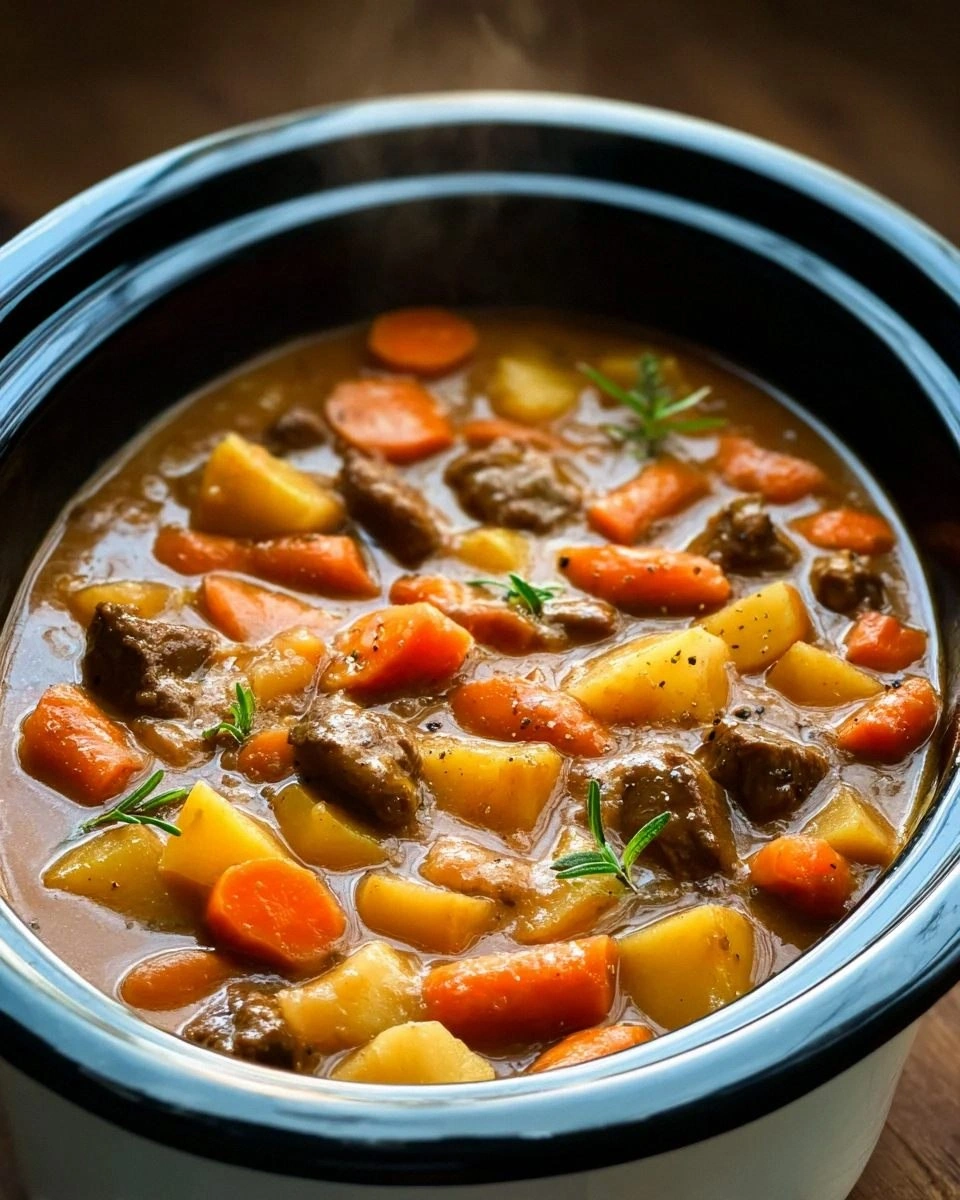
My crock pot and I had a falling out last winter. We'd been through twenty-something recipes together—some good, most forgettable—but the moment I tasted this beef stew, I forgave every watery, bland disappointment that came before. Picture me standing in my kitchen at 11:30 p.m., snow piling up outside, clutching a crusty hunk of bread like a life raft while I shamelessly spooned straight from the ceramic insert. The neighbors might have seen me through the window; I didn't care. This was the stew I'd been chasing since childhood: beef so tender it parts at the mere suggestion of a fork, carrots that taste like sunshine someone bottled in July, and gravy so glossy it could moonlight as melted chocolate. If you've ever tried a slow-cooker stew that tasted like hot library paste, I feel your pain. Stay with me here—this is worth it.
What changed everything was a dare from my friend Mia, who claimed no crock pot stew could rival her grandmother's Dutch oven version. Challenge accepted. I spent three weekends testing, tweaking, and taste-testing until my family staged an intervention ("Mom, please, anything but more stew"). I discovered a few rebellious moves: searing the beef in screaming-hot batches, deglazing with balsamic for a whisper of tang, and scattering the potatoes on top so they steam rather than dissolve. The result? A dare-you-to-stop-eating-it bowl that converted Mia in one spoonful. She actually texted me the next day asking if it was legal to bathe in gravy. I told her I don't make the rules.
Here's why you'll obsess over this version: it cooks while you live your life, greets you with a perfume of rosemary and black pepper, and somehow tastes better the second day when the flavors decide to get married. The sauce coats each cube of meat like velvet, yet it's broth-like enough that you'll keep going back for "just a sip" until you realize the ladle's hitting bottom. And because we're using humble chuck roast, your wallet stays happy even while your taste buds throw a parade. Future-you—coming home late, hair frozen, patience thin—will want to hug present-you for planning ahead.
Let me walk you through every single step—by the end, you'll wonder how you ever made it any other way.
What Makes This Version Stand Out
- Beef-Forward: Instead of sad, gray cubes that taste like wet newspaper, we develop a deep mahogany crust first. That caramelization equals flavor bombs that survive the long swim.
- Vegetable Integrity: Carrots stay bright and intact, peas pop, potatoes stay fluffy—not disintegrated—because we layer them like strategic swimmers.
- Gravy That Knows Its Job: Thickened naturally with a light dusting of flour on the beef, it coats your spoon but still slurps like stew, not wallpaper paste.
- Set-and-Forget Freedom: Ten minutes of morning hustle earns you a dinner that tastes like you stirred all day. Your slow cooker does the heavy lifting; you take the applause.
- Leftover Magic: This stew laughs in the face of refrigeration. Day two sees flavors mingle into something deeper, darker, dare-I-say romantic.
- Budget Brilliance: Chuck roast, root veggies, and pantry staples morph into a meal that could charge restaurant prices if you served it in fancy bowls.
Alright, let's break down exactly what goes into this masterpiece...
Inside the Ingredient List
The Flavor Base
Chuck roast is the undisputed heavyweight here. It starts tough, but give it time and collagen converts to silky gelatin that thickens sauce like nature's cornstarch. Skip expensive sirloin; it dries out faster than your phone battery on TikTok. When shopping, look for marbling—white flecks throughout—not thick fat caps. That intramuscular fat renders, self-basting the meat from within. If you absolutely must substitute, bottom round works, but promise me you'll shave thirty minutes off the cook time or you'll chew like leather.
Onions go in next, but not just any onion. I use yellow ones for their balance of sweet and sharp. Dice them medium; too fine and they melt into oblivion, too chunky and you get rude onion surprises. Let them pick up the fond left by the beef—those brown bits are liquid gold. If your eyes water, congratulations, you're alive. Pro tip: chill the onion for ten minutes before cutting and your mascara stays put.
The Texture Crew
Carrots bring sweetness that counterbalances beef's richness. Buy the fat ones, not baby carrots that taste like waterlogged pencils. Peel for aesthetics, but keep the tops for stock later. Cut on the bias—more surface area to grab gravy. If you're feeling fancy, a handful of rainbow carrots turn your crock into a color wheel. Under-cook slightly at the start; they'll finish gently in the slow heat.
Potatoes are the stew's couch potatoes—comforting, absorbent, essential. I use Yukon Gold; they hold shape and add buttery notes Russets can't match. Leave skins on for rustic charm or peel if you're feeding picky kids who think "speckled" equals poison. Keep them large, about two-inch pieces, so they don't dissolve into cloudy soup. Want to get wild? Swap half for parsnips and listen to your family ask, "Why does this taste like Christmas?"
The Unexpected Star
Balsamic vinegar is my secret handshake. A mere tablespoon deglazes the pan, scraping browned flavor into a sweet-tart syrup that seasons the whole pot. Don't worry—it won't scream vinegar. It just deepens flavors like background bass in your favorite song. Cheap balsamic works; save the 25-year aged stuff for caprese. No balsamic? A splash of red wine plus a teaspoon of brown sugar comes close.
The Final Flourish
Fresh rosemary needles look like tiny pine branches and smell like forest camping trips. Dried works in a pinch, but fresh lifts the whole dish into something ethereal. Strip leaves off woody stems—those stems can go in whole, then fish them out later. Thyme plays backup; use half as much or skip if earthy isn't your jam. A bay leaf sneaks in complexity, but remove before serving unless you enjoy accidental bitter surprises.
Everything's prepped? Good. Let's get into the real action...
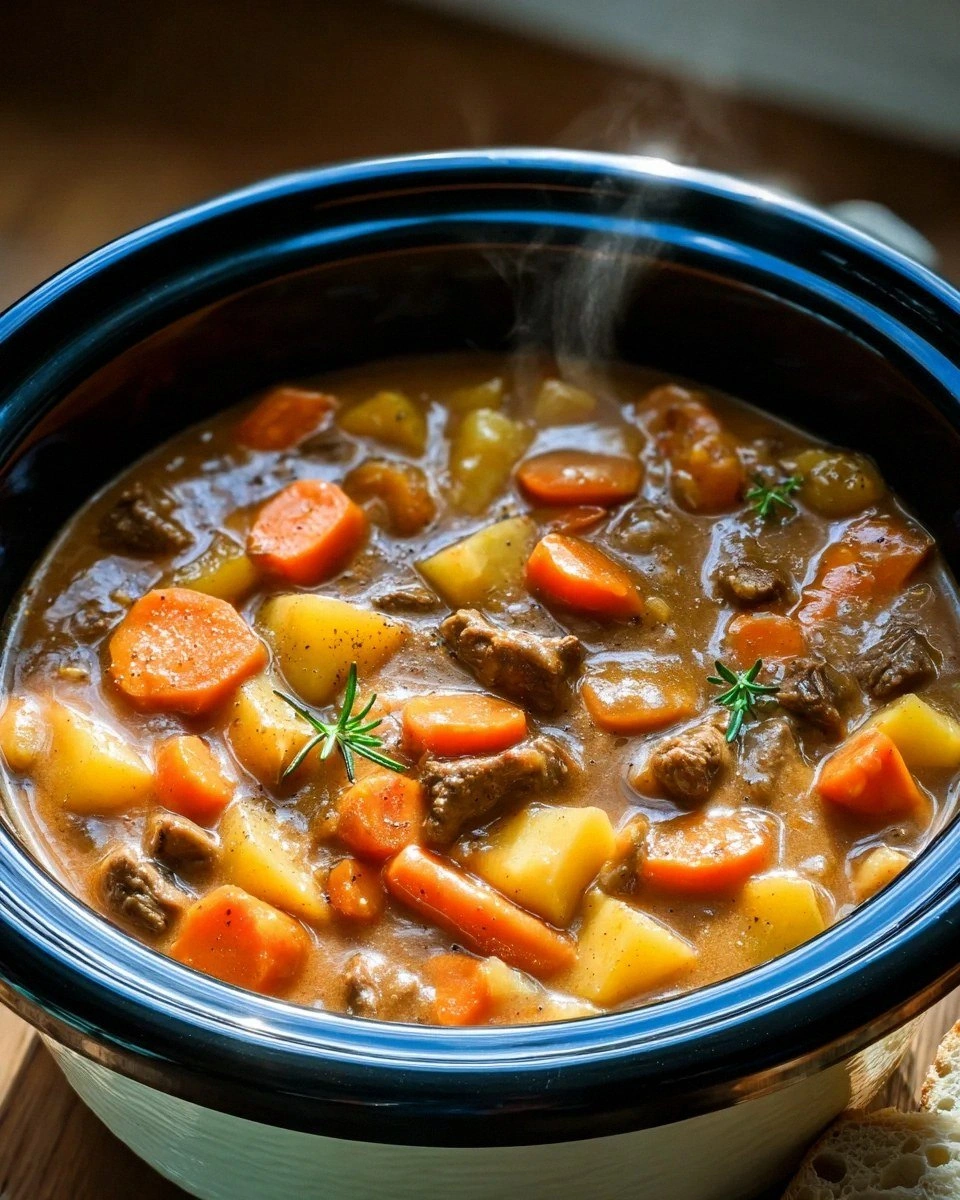
The Method — Step by Step
- Pat your beef cubes bone-dry with paper towels—moisture is the enemy of browning. Season generously with salt, pepper, and a light dusting of flour; think sheer stockings, not down jackets. Heat a heavy skillet over medium-high until a drop of water skitters like gossip across the surface. Sear beef in a single layer, 45 seconds per side. Work in batches; crowding steams instead of sears. That sizzle when it hits the pan? Absolute perfection. Transfer each caramelized batch straight into the waiting crock pot.
- Keep the skillet hot; add diced onions to the rendered fat and browned bits. Stir with a wooden spoon—metal scrapes the soul out of your pan. Let onions sweat until edges turn translucent, about three minutes. They'll drink up flavor and leave behind more fond. When your kitchen smells like the best burger joint in town, you're on track.
- Okay, ready for the game-changer? Pour balsamic vinegar into the skillet. It will hiss and bubble like a science fair volcano. Scrape vigorously; the acid lifts every speck of flavor into a mahogany syrup. This next part? Pure magic. Stir in tomato paste; cook one minute to remove raw edge. The color deepens to brick red—your visual cue to proceed.
- Deglazing done, scrape the entire glossy mixture over the beef. Add carrots, potatoes, rosemary, thyme, bay leaf, and beef broth. The broth should just peek above the solids—too much and you'll get soup, too little and you'll get a Sahara. I dare you to taste this and not go back for seconds before it even cooks.
- Now the fun part. Cover and set your slow cooker to low for eight hours—or high for four if you're impatient. Walk away. Fold laundry, binge your show, solve world peace. Resist lifting the lid; every peek costs you 15 minutes of trapped heat. Trust the process.
- With one hour left, add frozen peas. They'll thaw instantly and stay bright. If you add them earlier, they turn army green and mushy. Nobody wants that visual downer. Take a quick peek—meat should shred under gentle fork pressure. If it resists, give it another 30 minutes and check again.
- Five minutes before serving, fish out the bay leaf and woody herb stems. Taste for salt; stew usually needs a final sprinkle because potatoes drink seasoning like frat boys at happy hour. Add a crack of black pepper for aromatic top notes. And now the fun part: ladle into bowls, tear off chunks of crusty bread, and watch everyone go silent except for slurps.
- Confession time: I ate half the batch before anyone else got to try it. The beef was so tender it reminded me of pot roast my grandma slow-baked on Sundays. Each spoonful coated my tongue like gravy-flavored velvet. If this is wrong, I don't want to be right.
- Storage tip: Let the insert cool completely, then refrigerate overnight. Fat will solidify on top; scrape most off, but leave a little for flavor insurance. Reheat gently with a splash of broth. The stew thickens as it sits; thin to your liking. Future-you will high-five present-you tomorrow.
That's it—you did it. But hold on, I've got a few more tricks that'll take this to another level...
Insider Tricks for Flawless Results
The Temperature Rule Nobody Follows
Most recipes say "cook until tender," but here's what actually works: low and steady at 190 °F internal meat temp. Higher and the muscle fibers contract like over-tightened guitar strings, squeezing moisture into the broth and leaving you with chewy nuggets. Use an instant-read thermometer at the thickest cube; when it hits 190–195 °F, you're in shreddable territory. A friend tried rushing on high for six hours once—let's just say it didn't end well, and her dog wouldn't even eat the beef.
Why Your Nose Knows Best
Smell is your built-in timer. Around hour six on low, your house should smell like a steakhouse collided with a herb garden. If the aroma is weak, bump the temp to high for 30 minutes to jump-start Maillard reactions. If you smell scorched tomato, you may have hot spots—stir gently and add a splash of broth. Trust that sensory GPS; it's rarely wrong.
The 5-Minute Rest That Changes Everything
Once cooking ends, let the stew sit on warm with the lid ajar for five minutes. This brief nap allows juices to redistribute, preventing a flood when you ladle. Think of it as a post-gym stretch for meat fibers. Skipping this step isn't criminal, but your bowl will look soupier and your meat slightly drier. Five minutes, that's all.
Creative Twists and Variations
This recipe is a playground. Here are some of my favorite ways to switch things up:
Smoky Cowboy Stew
Swap half the beef for smoked sausage coins, add a diced chipotle in adobo, and replace rosemary with oregano. Finish with a handful of frozen corn and a squeeze of lime for a campfire vibe that'll have you humming banjo tunes. Kids love the mild smoke; adults spike their bowls with hot sauce.
French Bistro Edition
Use red wine instead of balsamic, trade potatoes for pearl onions and mushrooms, and swirl in a tablespoon of butter at the end. Serve over buttered egg noodles with a parsley shower. Instant bistro vibes—no passport required.
Moroccan Sunset
Add a cinnamon stick, a pinch of cumin, and a handful of dried apricots. Substitute sweet potatoes for regular ones and finish with toasted almonds. The sweet-savory combo tastes like a spice market at dusk. Pair with couscous and prepare for applause.
Low-Carb Caveman
Skip potatoes and add turnips and radishes; they mimic spuds without the carb load. Thicken with a teaspoon of xanthan gum instead of flour. You get the same hearty texture minus the post-dinner nap.
Firehouse Hot
Keep everything the same but add a diced jalapeño, a pinch of cayenne, and a dash of hot smoked paprika. The heat builds slowly, warming your chest like a whisky chaser. Perfect for snow days when you need internal central heating.
Weekday Vegetarian
Replace beef with two cans of chickpeas and use mushroom broth. Add a tablespoon of miso for depth. You won't miss the meat; mushrooms and miso deliver that elusive umami bomb. Even carnivores clean their bowls.
Storing and Bringing It Back to Life
Fridge Storage
Cool leftovers within two hours and stash in airtight containers—glass keeps flavors purest. It keeps up to four days, though good luck making it last that long. Store bread separately so it doesn't dissolve into soggy mush. Reheat single portions in a saucepan with a splash of broth; microwaves turn potatoes rubbery and meat stringy.
Freezer Friendly
Portion cooled stew into zip bags, press out air, and freeze flat for easy stacking. It stays stellar for three months. Thaw overnight in the fridge, not on the counter—nobody wants a bacteria rave. If gravy separates after thawing, whisk in a teaspoon of cornstarch slurry while reheating and it comes back together like reconciled best friends.
Best Reheating Method
Low and slow wins again. Dump into a pot, add a quarter-cup broth, cover, and warm over medium-low, stirring occasionally. Add a tiny splash of water before reheating—it steams back to perfection. Avoid boiling; aggressive heat toughens beef faster than you can say "microwave mistake."