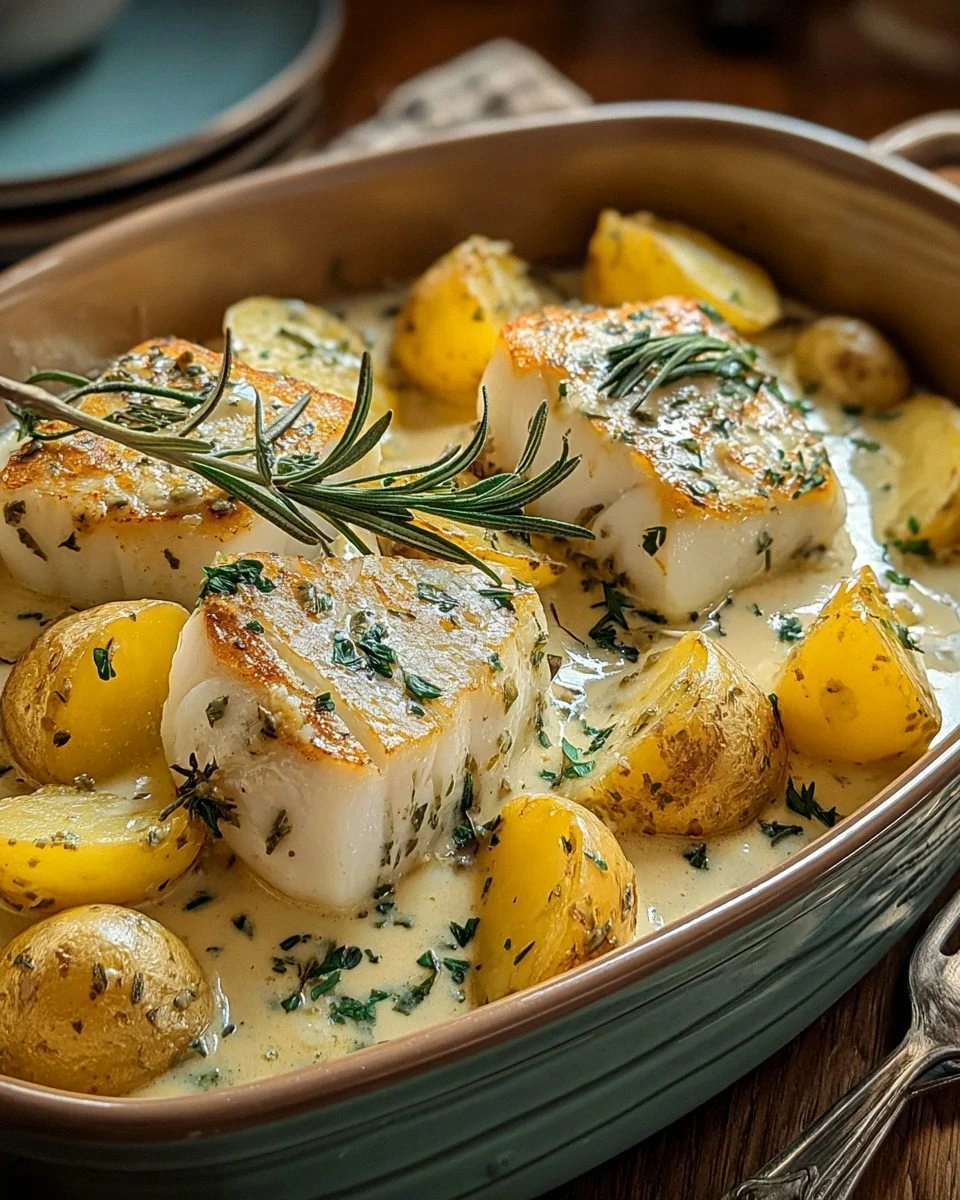
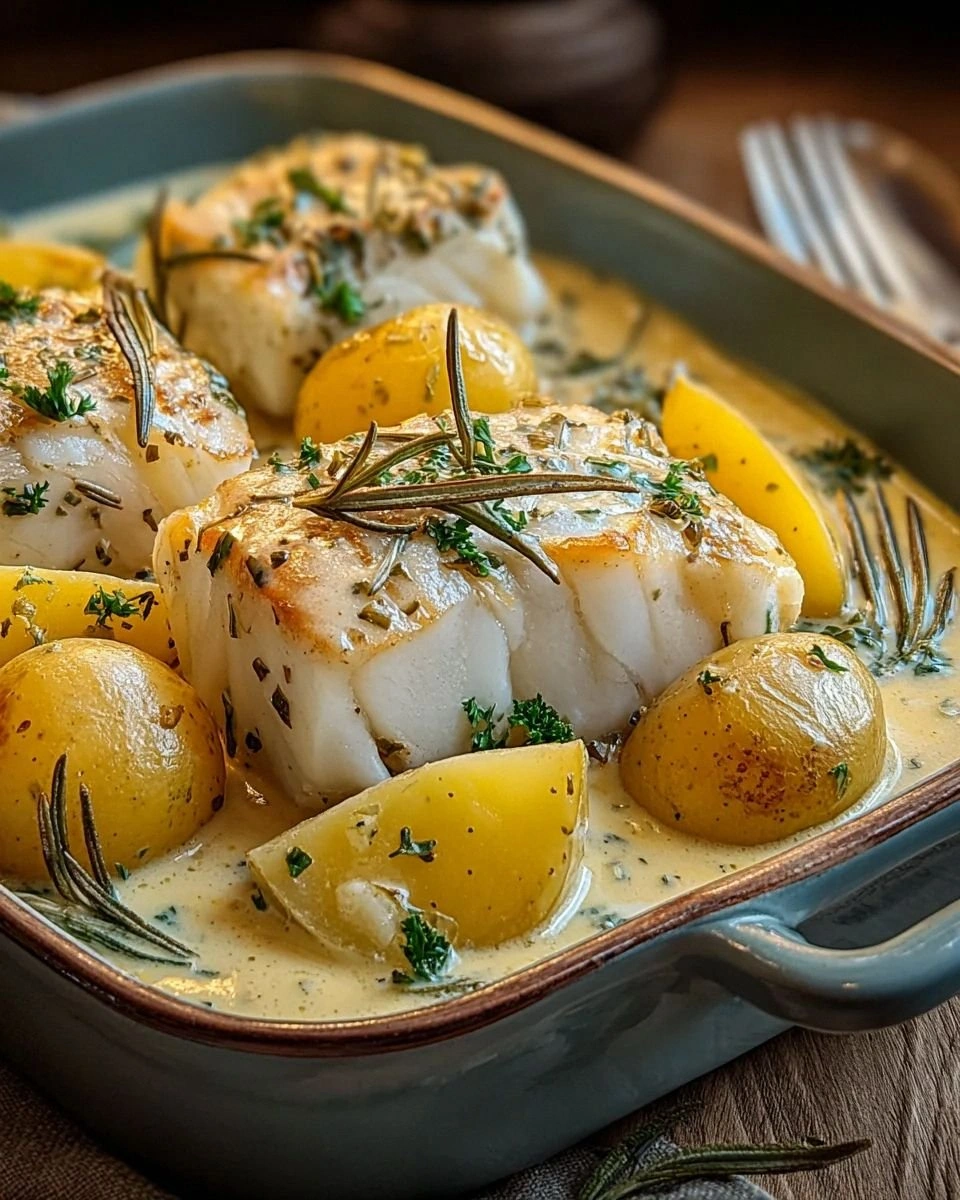
I still remember the Tuesday night I set out to make something—anything—for dinner, only to realize I'd forgotten to thaw the chicken, the rice was mysteriously empty, and the only protein left was a couple of cod fillets eyeing me from the freezer like they knew they were my last hope. The fridge situation wasn't much better: a handful of waxy potatoes, a sprig of rosemary that had seen better days, and leftover cream from a dessert experiment that went sideways. In my head I was already speed-dialing pizza, but pride (and an empty wallet) pushed me to just start cooking. Twenty-five minutes later, the smell drifting through the apartment was so outrageously good that my neighbor knocked on my door asking what restaurant I'd ordered from. One bite and I was speechless—buttery cod that flakes like it's auditioning for a cooking show, potatoes that have soaked up a rosemary-scented cream bath, and a sauce so silky it could sell itself. The best part? It's stupidly simple, and I've spent the last year tweaking every micro-detail so you can replicate that victory on your busiest weeknight.
Picture this: you, standing over the stove, wooden spoon in hand, the gentle sizzle of garlic hitting olive oil, and an aroma so luxurious you'd swear a French chef is hiding in your pantry. The potatoes soften first, nestling into the pan like they're settling in for a spa treatment, while the cream reduces down to velvet. The fresh rosemary—yes, fresh, don't even think about the dried twigs—releases piney, citrusy oils that wrap around your kitchen like a cashmere scarf. And when the cod slips in at the very last minute, it poaches gently until it turns opaque and pillowy, soaking up every ounce of that herbaceous sauce. Close your eyes for a second and you might just find yourself in a seaside trattoria somewhere between Marseille and your couch.
Most recipes get seafood and potatoes wrong: they treat them like strangers at a party, cooking them separately, then plopping them together on a plate like an awkward setup. That's why the potatoes taste like, well, potatoes, and the sauce never quite hugs the fish. My approach braids every flavor into one another so aggressively that the potatoes drink in the oceanic sweetness of the cod, while the fish gets gently perfumed by rosemary cream. Stay with me here—this is worth it. We're talking one pan, forty-five minutes, restaurant-level results, and cleanup so minimal you could probably con your roommate into doing it.
Okay, ready for the game-changer? We're using a single skillet, and we're finishing the whole thing off with a pat of cold butter that melts into the sauce at the very end, glossing everything like a magazine cover. If you've ever struggled with dry, rubbery cod or potatoes that stay stubbornly al dente, you're not alone—and I've got the fix. Let me walk you through every single step—by the end, you'll wonder how you ever made it any other way.
What Makes This Version Stand Out
One-Pan Wonder: Everything—from searing potatoes to poaching cod—happens in the same skillet, weaving flavors together and saving you an hour of dishwashing therapy later.
Velvet-Silk Sauce: By reducing cream with a splash of starchy potato water, you get a naturally thick, glossy sauce that clings to every flake of fish like it's auditioning for a jewelry commercial.
Foolproof Fish: Instead of pan-searing and risking overcooked edges, we gently poach the cod in the cream bath so it stays custardy and moist even if you forget to set a timer.
Rosemary Hit: Most recipes timidly wave the herb over the pot. We bruise the leaves first, then let them simmer and finish with a fresh chiffonade so bright it tastes like pine needles drenched in sunshine.
Weeknight Speed: Active cooking time is barely thirty minutes, meaning you can walk in the door, kick off your shoes, and still eat like you're on a seaside vacation before your favorite show queues up.
Leftover Magic: Because the sauce is so rich, it reheats like a dream, turning tomorrow's lunch into a luxurious desk picnic that will make coworkers jealous and instant-message you for the recipe.
Ingredient Flexibility: Forgot cod? Halibut or haddock slide in seamlessly. Dairy averse? Coconut cream plus a squeeze of lime whisks the flavor profile to Thailand in the best possible way.
Inside the Ingredient List
The Flavor Base
Extra-virgin olive oil is the first thing in the pan, so buy something you'd happily dip bread into. A grassy, peppery oil perfumes the potatoes and prevents them from sticking while they develop those golden edges that taste like French fries' sophisticated older cousin. Garlic follows quickly; keep the slices on the thick side so they soften into buttery nuggets rather than burning into acrid shards. Shallots are the stealth bomber here—sweeter than onion, more refined, and they dissolve into the sauce so completely that nobody will know they're there, they'll just think you're a culinary wizard.
The Texture Crew
Waxy potatoes—think Yukon Gold or baby reds—are non-negotiable because they hold their shape after a cream bath, unlike russets that dissolve into sad, starchy clouds. Slice them a bit thicker than a credit card; too thin and they turn into potato chips, too thick and they'll still be crunchy when the cod's ready. Heavy cream is the luxurious foundation, but a splash of whole milk lightens it just enough that you won't need a nap after dinner. Fresh cod should smell like the ocean on a good day, not like low-tide despair; if it smells fishy, skip it and make a frittata instead.
The Unexpected Star
Rosemary is usually the afterthought herb tossed on roasted potatoes, but here it's co-lead. A single sprig can transform cream into something that tastes like it was kissed by a pine forest and a citrus grove at the same time. Lemon zest amplifies that piney note while adding a bright pop that keeps the dish from sliding into heavy Alfredo territory. A whisper of Dijon mustard emulsifies the sauce and adds a tangy backbone you'll never be able to pinpoint, but you'd miss it if it were gone.
The Final Flourish
Cold butter swirled in at the end is the restaurant trick that makes sauces glisten like they've been professionally photographed. Use unsalted so you can control seasoning; salted butter varies wildly between brands and can turn your masterpiece into a salt lick. Freshly cracked black pepper—yes, the fancy stuff you grind yourself—blooms in the warm sauce, releasing floral heat you can't get from the pre-ground sawdust. A squeeze of lemon just before serving is like the period at the end of a perfect sentence: small, but everything feels unfinished without it.
Everything's prepped? Good. Let's get into the real action...
The Method — Step by Step
- Warm your largest skillet over medium heat and add two tablespoons of olive oil. When the oil shimmers like a desert highway, slide in the sliced potatoes in a single layer. The sizzle should sound like applause—if you hear nothing, the pan isn't hot enough yet. Let them sit undisturbed for a full three minutes; this sear builds the golden crust that will later soften but still taste like a french fry's better self. Give them a confident flip with a thin spatula, add a pinch of salt, and sauté until the edges go translucent and the centers remain just firm.
- Clear a small space in the center and add the shallots and garlic. The trick here is to keep them in the oil-rich middle so they soften without taking on color; color equals bitterness, and bitterness will bully the delicate cod later. Stir them around for about ninety seconds until they look relaxed and glossy, then fold everything together so the potatoes get coated in that fragrant oil. Your kitchen should smell like you hired a personal chef who's name-dropping Mediterranean grandmothers.
- Pour in one cup of heavy cream and half a cup of water you've reserved from the potato bowl—this starchy liquid is liquid gold when it comes to thickening without clumps. Add the bruised rosemary sprig and bring the mixture to a gentle simmer. You want lazy bubbles, not a rolling boil that will curdle the dairy. Reduce heat to low, cover, and cook for about eight minutes, just until a fork slides through a potato slice with the tiniest bit of resistance.
- While the potatoes are having their cream spa treatment, pat the cod fillets dry with paper towels; moisture is the enemy of proper poaching, and wet fish will cool your sauce down instantly. Season both sides with salt, pepper, and a whisper of smoked paprika for depth. Slide the fillets onto the surface of the simmering cream, nestling them among the potatoes but keeping them mostly submerged. Spoon a little sauce over each fillet so they feel welcome, then clamp on the lid and let them poach for six to eight minutes, depending on thickness.
- Check doneness by pressing the top of the fillet with your finger; it should feel like the base of your thumb when you touch your thumb to your middle finger—firm but still springy. If it flakes apart, you've overshot, but even then the cream saves you because it keeps the shards moist. Transfer the fish to a warm plate and tent loosely with foil; carry-over heat will finish the job while you give the sauce its final polish.
- Crank the heat back to medium and whisk in a teaspoon of Dijon and a squeeze of lemon. The sauce will tighten immediately, turning from loose cream into something that coats the back of a spoon like melted ice cream. Drop in two tablespoons of cold butter, whisking constantly so it emulsifies into glossy silk. This is the moment of truth—taste the sauce and season boldly with salt, pepper, and another tiny squeeze of lemon until it sings like a tenor at the opera.
- Return the cod and any accumulated juices to the pan, spooning sauce over each fillet so they glisten like they've been professionally lit. Let everything mingle for one final minute so the flavors feel married, not just dating. Sprinkle with fresh rosemary needles you've chiffonaded into whisper-thin ribbons; they add a bright herbal pop that the cooked sprig can't deliver.
- Turn off the heat and let the skillet rest for a full five minutes; patience here is the difference between a sauce that separates and one that stays luxurious. During this time the potatoes soak up the final bit of liquid, turning into creamy nuggets that burst with rosemary and ocean brine. Serve right from the pan at the table—it's rustic, it's communal, and it saves you washing another dish. And now the fun part: watching everyone's eyes go wide at the first bite, because this is hands down the best version you'll ever make at home.
That's it—you did it. But hold on, I've got a few more tricks that'll take this to another level...
Insider Tricks for Flawless Results
The Temperature Rule Nobody Follows
Low and slow is gospel here: if the cream reaches a hard boil the proteins seize, and you'll have potato-flavored cottage cheese. Keep the heat gentle enough that you could comfortably dip a finger for two seconds without yelping; if you're unsure, err on the cooler side and just extend the simmer time by a couple of minutes. A friend tried speeding things up on high once—let's just say the sauce looked like it had a bad case of acne and tasted like it was mad at us.
Why Your Nose Knows Best
Trust your sense of smell more than the clock. When the rosemary essence blooms, you'll get a pine-fresh aroma followed by a faint citrus note; that's when you add the cod. If you smell sharp, medicinal whiffs, the herb is overcooking and will turn bitter. I've learned to set a backup timer for eight minutes after adding the rosemary, then rely on my nose for the final cue.
The 5-Minute Rest That Changes Everything
Don't laugh—those five minutes off heat are where restaurant-level gloss happens. The butter finishes melting, the starch from the potatoes thickens the sauce to nap-time silkiness, and the fish relaxes so it doesn't seize into cotton when you cut it. Cover the skillet with a lid slightly ajar so steam escapes but warmth stays locked in; think of it as a mini sauna for your dinner.
The Seasoning Sweet Spot
Season the potatoes early so salt penetrates while they cook, but save the final seasoning of the sauce until the very end. Cream reduces and concentrates flavors; salting too soon leaves you with a briny swamp. Taste after whisking in the butter, then add salt in tiny pinches until the sauce tastes like a slightly salted caramel—present but not shouting.
Creative Twists and Variations
This recipe is a playground. Here are some of my favorite ways to switch things up:
Mediterranean Sun
Swap rosemary for oregano, add a handful of halved cherry tomatoes during the last two minutes, and finish with a crumble of feta. The tomatoes burst and sweeten the sauce, while the feta adds tangy pops that make the whole dish feel like a vacation on Santorini.
Smoky Mountain
Add a pinch of smoked paprika and a diced strip of bacon right after the potatoes. The bacon renders and seasons everything, and the paprika stains the cream a sunset orange that tastes like campfire stories and flannel shirts.
Green Garden
Stir in two big handfuls of baby spinach during the final simmer; they'll wilt into silk ribbons and turn the sauce a spring green. Add a squeeze of lime instead of lemon for a grassy brightness that screams farmers market brunch.
Spicy Coastal
Float a sliced red chili in the cream and finish with cilantro instead of rosemary. The gentle heat plays off the sweet cod, and the cilantro adds a citrusy punch that'll have you dreaming of Thai beaches.
Luxe Upgrade
Use halibut cheeks if you can find them, swap half the cream for crème fraîche, and finish with a drizzle of white truffle oil. It's over-the-top decadent and perfect for that "I'm sorry" dinner after you've forgotten an anniversary.
Vegan Ocean
Substitute full-fat coconut milk for cream, use oyster mushrooms torn into chunks for protein, and finish with a dash of soy sauce and lime. The mushrooms absorb the rosemary and give a similar flaky texture without any seafood.
Storing and Bringing It Back to Life
Fridge Storage
Let the skillet cool completely, then transfer leftovers to an airtight glass container; cream sauces take on plastic flavors like gossip in small towns. It'll keep for up to three days, but the potatoes will continue drinking the sauce, so expect the texture to be thicker—more like chowder than soup. Reheat gently in a saucepan with a splash of milk over low heat, stirring often; microwaves murder cream sauces by turning them into oily messes.
Freezer Friendly
Freeze only the potato-cream base; cod doesn't take kindly to the freezer and will turn into stringy rubber upon revival. Spoon the cooled mixture into freezer bags, press out air, and freeze flat so it thaws quickly. When ready, defrost overnight in the fridge, bring to a gentle simmer, and add fresh cod fillets as per the original recipe. It'll taste like you just cooked it, scout's honor.
Best Reheating Method
Low, slow, and covered is the mantra. Place leftovers in a skillet with a splash of milk or water, cover, and heat over the lowest flame, stirring occasionally until just warmed through. Add a tiny knob of cold butter at the end to bring back that restaurant sheen. I dare you to taste this and not go back for seconds—even on day three.