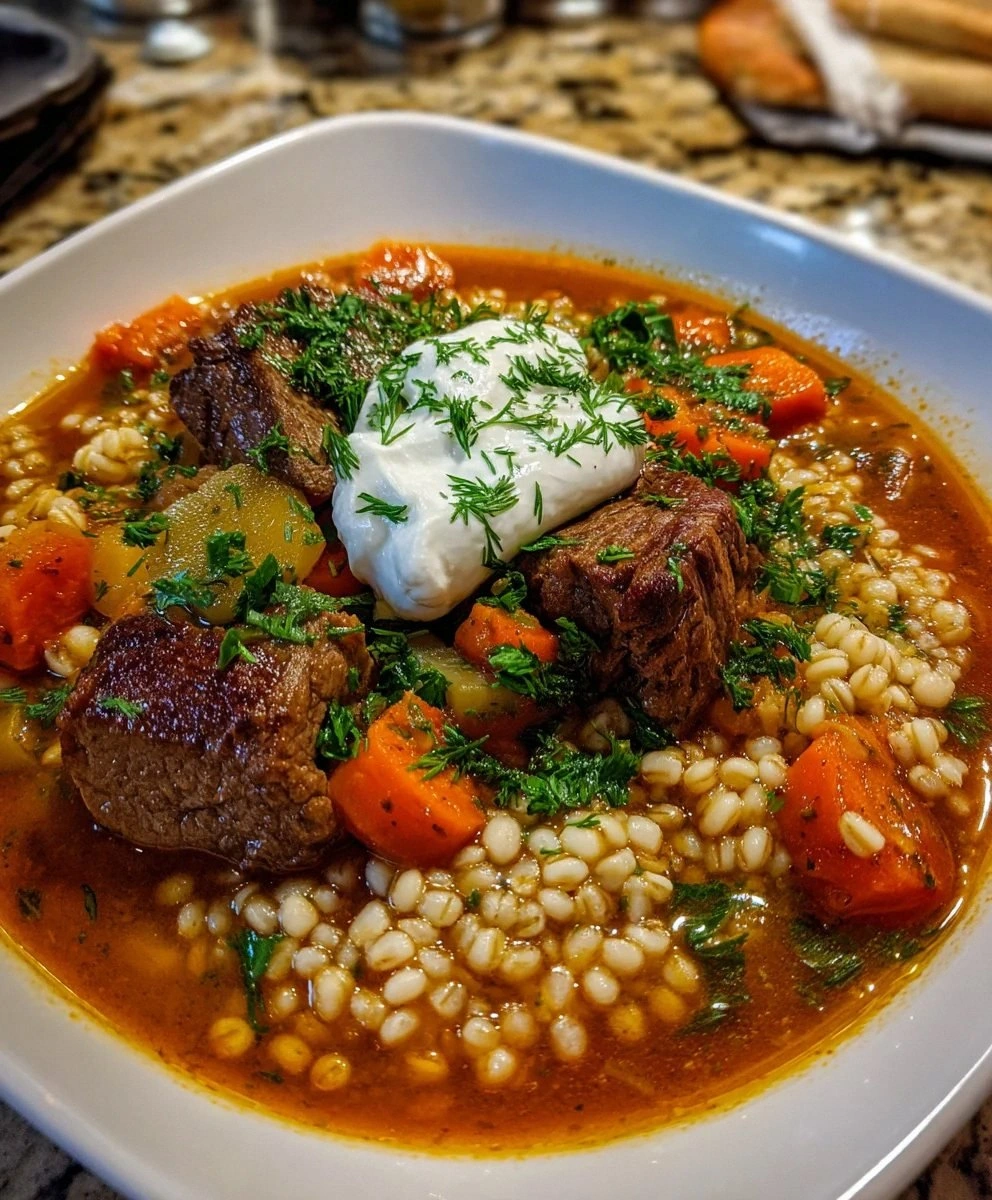
I still remember the first time I tasted this soup. It was one of those grey, drizzly afternoons where everything feels heavy — the sky, my mood, even my eyelids. I was visiting my friend Sara, who had just returned from a three-week trip to Iran, and she greeted me at the door with this mysterious, fragrant pot of something that smelled like cloves, mint, and slow-cooked stories. “You have to try this,” she said, ladling the thick, jeweled broth into a bowl. One spoonful and I was done for. The beef melted like secrets, the barley popped like tiny pearls between my teeth, and the dried mint did this wild, aromatic cartwheel on my tongue that made me close my eyes and sigh so loudly her cat jumped off the couch.
Fast-forward through three failed attempts in my own kitchen — one where the beans turned to mush, one where I scorched the bottom so badly the smoke alarm sang opera, and one where I forgot the turmeric and ended up with beige sadness — and finally, I cracked the code. This version isn’t just a soup; it’s a warm, edible passport. It layers Persian pantry staples with the kind of stick-to-your-ribs heartiness you expect from a classic beef-barley situation, but with saffron-tinged swagger and herbaceous fireworks that make your neighbors sniff suspiciously at their windows. I dare you to taste this and not go back for seconds. Actually, I triple-dog dare you, because I ate half the batch before anyone else got to try it and I’m not even sorry.
What makes this iteration different? Most recipes treat barley like background noise, but here it soaks up every ounce of spiced broth until each grain tastes like it’s been privately tutored by turmeric and dried mint. The beans and lentils dissolve just enough to thicken the soup naturally, so you get silk without sludge. And that final swirl of kashk (or sour cream if you’re in a pinch) turns the whole thing into velvet. Picture yourself pulling this off the stove, the windows fogged, your ladle dripping gold, the whole kitchen smelling like you’ve been smuggling saffron in your apron. Stay with me here — this is worth it.
Let me walk you through every single step — by the end, you’ll wonder how you ever made it any other way.
What Makes This Version Stand Out
Beef That Behaves: Chuck roast, seared until the edges caramelize like campfire marshmallows, then slow-simmered until it practically files its own resignation from chewiness. You’ll fish out cubes that surrender between your molars like they’ve been waiting their whole lives for this moment.
Barley With Backbone: Pearl barley goes in early enough to drink the broth like a sponge, but late enough to keep its al dente dignity. Think of it as pasta’s cooler, nuttier cousin who studied abroad and came back fluent in flavor.
Bean Trinity Magic: A trio of lentils, white beans, and split peas creates three different textures: creamy, buttery, and whisper-thin skins that pop. It’s like a tiny bean concerto in every spoonful.
Mint That Punches Up: Dried mint bloomed in hot butter is the Persian equivalent of garlic in olive oil — an aromatic mic drop. The scent alone will make you involuntarily hum.
One-Pot Bravado: No precooking grains in a separate pot, no babysitting beans. Everything happens in the same Dutch oven, which means fewer dishes and more couch time with your new favorite soup.
Make-Ahead Warrior: Flavors meld overnight into something even deeper, so you can absolutely cook this on Sunday and be the weekday hero who only needs to hit reheat.
Freezer-Friendly Flex: Portion it into mason jars, freeze, and you’ve got future-you covered when the next polar vortex decides to photobomb your week.
Alright, let’s break down exactly what goes into this masterpiece...
Inside the Ingredient List
The Flavor Base
Beef stew meat is the obvious star, but only if you treat it right. Go for chuck — those marbled hunks that look like they’ve been hitting the gym. Skip the pre-cut “stew meat” that’s suspiciously uniform; odds are it’s a mash-up of trimmings that will cook at different speeds. Cut your own two-inch cubes so every piece has the same meltability. And please, for the love of all that is holy, pat them bone-dry before searing. Moisture is the enemy of the mahogany crust that later detonates flavor into the broth.
Onion goes in next, diced small enough to disappear but large enough to leave sweet little ghost notes. Let it pick up the browned beef bits — those are free fond packets of umami. If your pot looks like it’s wearing a scorched sweater, congratulations, you’re on the right track. A splash of stock will deglaze that deliciousness faster than you can say “pass the turmeric.”
The Texture Crew
Pearl barley is the grain equivalent of that friend who brings board games to the party: dependable, comforting, and surprisingly fun. Rinse it under cold water until the runoff is clear; excess starch equals gummy soup, and nobody invited that. Barley swells to three times its size, so if you think two handfuls look skimpy, trust the process. Undercook by five minutes if you plan to reheat leftovers — it will finish cooking in its sleep.
Dried lentils dissolve just enough to thicken, while soaked white beans stay proudly intact. Think of lentils as the introvert who quietly makes everything better, and white beans as the extrovert who brings sparkle (and creaminess) to each bowl. If you forgot to soak beans overnight, don’t panic. The quick-soak method — cover with water, boil two minutes, let stand one hour — saves face and dinner.
The Unexpected Star
Dried mint is the plot twist. It’s not the fresh stuff lounging in hipster cocktails; it’s concentrated, slightly grassy, and when it hits hot fat it releases an aroma that makes Persian grandmothers close their eyes and smile at nothing. Bloom it for thirty seconds max — any longer and it turns bitter like a rejected poet. If you can only find fresh mint, triple the quantity and add it at the very end; you want the volatile oils alive and kicking.
Turmeric is the golden child. Buy the good stuff — bright marigold, not dusty ochre — and store it in a dark jar. Light is turmeric’s kryptonite. A teaspoon here won’t shout, but it will hum in the background like bass in a jazz trio.
The Final Flourish
Kashk, if you can find it, is fermented whey that tastes like tangy, umami-rich cream cheese wearing a leather jacket. Stir it in off-heat so it doesn’t break into chalky clumps. No kashk? Full-fat sour cream works, or Greek yogurt thinned with a splash of water. Vegan? Coconut milk with a squeeze of lemon will moonlight respectably.
Everything’s prepped? Good. Let’s get into the real action...
The Method — Step by Step
- Heat your Dutch oven over medium-high until a drop of water skitters like it’s late for a meeting. Add two tablespoons of oil — enough to shimmer but not smoke. Pat the beef cubes dry (seriously, I can still hear my culinary school instructor yelling “moisture equals steam, not sear!”). Season generously with salt and pepper, then lay them down like introverts at a concert: no touching. Sear four minutes per side until the bottom releases willingly. The crust should look like the surface of a well-loved cast-iron skillet — that’s pure flavor luggage the broth will pick up later.
- Scootch the beef to the edges and drop in the diced onion. Let it sizzle in the beef fat, scraping up the brown bits with a wooden spoon. When the edges turn translucent and the centers opaque, add minced garlic. Count to thirty — that’s how long it takes for garlic to go from fragrant to furious. Pour in a splash of stock and deglaze like you’re pressure-washing deliciousness.
- Now the spice dump: a heaping teaspoon of turmeric and half that of black pepper. Stir for forty-five seconds until the onions look sun-kissed and the kitchen smells like a spice caravan. This blooming step cooks the raw edge off turmeric, preventing that chalky aftertaste that haunts cafeteria curry.
- Tip in the pearl barley, stirring to coat every nub in the oniony fat. You’re toasting the grains without them ever touching a dry pan — sneaky depth. Add the dried lentils and give them the same glossy treatment. They’ll pick up a light gold coat that acts like flavor insurance.
- Pour in the beef stock — hot, please, so you don’t arrest the cooking. The liquid should just cover the solids by half an inch; barley drinks like a sailor, so resist the urge to overdo it. Bring to a gentle boil, then drop to the lowest simmer your stove allows. Cover, but crack the lid so steam can escape like gossip.
- After thirty minutes, the barley will look plump and the lentils will have released starchy confetti. Stir in the soaked white beans and two cups of hot water. Simmer another twenty minutes, stirring occasionally to prevent bean bottom clingers.
- Meanwhile, in a tiny skillet, melt a tablespoon of butter over medium heat. Add the dried mint and swirl off-heat after thirty seconds. It will sizzle like Rice Krispies and smell like summer in Tehran. Set this emerald oil aside for the grand finale.
- Test a cube of beef — it should yield to gentle pressure. If it fights back, give it ten more minutes. Once tender, season assertively with salt; under-seasoned soup is a party where nobody dances. Stir in half the fresh herbs (parsley, cilantro, dill, chives) and watch the broth brighten like it’s been told a good joke.
- Off heat, swirl in the kashk or sour cream. Drizzle the minted butter in Jackson Pollock squiggles. Scatter the remaining herbs on top for color pop. Serve with warm flatbread and watch people fall silent — the highest compliment.
That's it — you did it. But hold on, I've got a few more tricks that'll take this to another level...
Insider Tricks for Flawless Results
The Temperature Rule Nobody Follows
Keep the soup at the gentlest simmer possible — tiny bubbles should barely break the surface. Anything more vigorous and the barley releases too much starch, turning your elixir into wallpaper paste. If you see angry bubbles, lower the heat and slide the pot slightly off the burner. Your patience will be rewarded with distinct grains that still manage to float luxuriously.
Why Your Nose Knows Best
When the dried mint hits butter, lean in and inhale. If it smells sharp and green, you nailed it. If it smells like dusty hay, you’ve cooked it ten seconds too long and bittersville awaits. Trust your nostrils; they’ve been evolution-tested for survival. I once ignored my nose and served a batch that tasted like I’d ladled up a cedar closet.
The 5-Minute Rest That Changes Everything
After finishing, let the pot sit uncovered for five minutes. This brief pause allows the steam to escape, concentrating flavors and preventing that thin skin from forming on top. It also drops the temperature to tongue-friendly territory, so you don’t scorch your taste buds and ruin the experience. Future-you, hovering with a spoon at midnight, will be grateful.
Creative Twists and Variations
This recipe is a playground. Here are some of my favorite ways to switch things up:
Lamb & Prune Royale
Swap beef for lamb shoulder and tuck in six prunes during the last hour. The prunes melt into silky sweetness that plays off lamb’s grassier notes. Finish with toasted walnuts for crunch and a squeeze of pomegranate molasses for tang. Serve when you want to feel like you’re dining in an Esfahan courtyard.
Vegetarian Gold
Omit meat, use vegetable stock, and double the beans. Add a sheet of roasted, crumbled tempeh for chew and a tablespoon of white miso for depth. The miso’s fermented funk stands in beautifully for beef’s umami. Even carnivores have cleaned their bowls.
Spicy Shirazi
Stir in a teaspoon of Aleppo pepper with the turmeric and finish with a fistful of chopped pickles. The mild heat and bright acid make the soup feel like it’s wearing red lipstick. Serve with cold yogurt drink doogh on the side for temperature tango.
Spring Green Edition
Sub half the barley with farro, add a cup of shelled fava beans in the final ten minutes, and shower with snipped chive blossoms. The colors look like you’ve trapped a meadow in a bowl, and the flavors are lighter on their feet.
Campfire Stew
Brown everything in bacon fat, add a smoked ham hock with the stock, and finish with a shot of espresso. The smoke and bitter coffee make this taste like it was simmered over embers while wolves howled. Perfect for ski weekends.
Storing and Bringing It Back to Life
Fridge Storage
Cool completely, then ladle into airtight glass containers. It keeps five days refrigerated, though barley continues drinking, so the soup thickens. Leave half an inch of space if you’re using jars to avoid pressure cracks. Reheat gently with a splash of water or stock; microwaves murder texture, so opt for stovetop when possible.
Freezer Friendly
Portion into quart-size freezer bags, squeeze out excess air, and freeze flat for easy stacking. It keeps three months without quality loss. Thaw overnight in the fridge or submerge the sealed bag in cool water for a quick two-hour defrost. Avoid refreezing — the beans get mealy and sad.
Best Reheating Method
Slide the soup into a pot, add a quarter-cup of water per serving, cover, and warm over low heat. Stir often so the bottom doesn’t scorch. Taste and adjust salt; freezing dulls seasoning. Finish with a fresh drizzle of minted butter and a sprinkle of herbs to wake it up.