I remember the night I was chasing a midnight craving for something that felt both comforting and daring. My fridge was a sad collection of leftover veggies and a block of steak that had seen better days. I tossed it in a bowl, added a splash of soy sauce, a drizzle of sesame oil, and a handful of potatoes, and let the flavors mingle. The aroma that hit the kitchen was a heady mix of umami, garlic, and a faint sweetness that made my stomach do a happy dance. That moment was the spark that ignited this recipe, and I’ve been chasing that exact, unforgettable taste ever since.
Picture this: you’re standing over a hot skillet, the steak bites sizzle with a crackle that sounds like applause, the potatoes puff up like tiny golden clouds, and the sauce thickens into a glossy, glossy coat that clings to every morsel. The heat is just right—hot enough to sear the meat but gentle enough to keep the potatoes tender inside. The colors shift from pale gray to a deep, caramelized brown, and the scent of ginger and garlic dances through the air. The sound of the oil bubbling is music to a cook’s ears, and the touch of the sizzling pan feels like a promise of flavor. I dare you to taste this and not go back for seconds.
What makes this version stand out is that it’s a single-pan masterpiece that balances boldness with subtlety. It’s a dish that feels like a hug after a long day, yet it carries a punch that makes your taste buds sing. I’ve perfected the ratio of soy to sweet so that the sauce coats the steak bites like velvet without overpowering them. The potatoes, when roasted just right, have a crisp edge that shatters like thin ice, revealing a fluffy interior that melts in your mouth. It’s hands down the best version you’ll ever make at home because every bite is a revelation.
And here’s the kicker: this dish uses a simple cornstarch slurry that turns the sauce into a silky glaze in seconds, a trick many forget. The result is a glossy sheen that catches the light and makes every bite look as good as it tastes. I’ll be honest — I ate half the batch before anyone else got to try it, and the leftovers still hold their shape. The next time you pull this out of the oven, the whole kitchen will smell incredible, and the anticipation will make your heart race. Okay, ready for the game-changer? Let me walk you through every single step — by the end, you’ll wonder how you ever made it any other way.
What Makes This Version Stand Out
- Taste: The sauce is a harmonious blend of salty, sweet, and umami flavors that coat each bite without drowning it. The subtle heat from chili flakes adds a whisper of spice that lingers pleasantly.
- Texture: The steak bites are seared to a caramelized crust while remaining juicy inside, and the potatoes achieve a golden, crunchy exterior with a tender core.
- Simplicity: All of this happens in one skillet, so cleanup is minimal and the process is streamlined.
- Uniqueness: The combination of hoisin sauce and rice vinegar creates a tangy-sweet glaze that is rarely seen in traditional steak dishes.
- Crowd Reaction: Guests rave about the balanced flavors and the satisfying crunch of the potatoes, making it a crowd-pleaser at dinner parties.
- Ingredient Quality: Fresh, high-quality steak and potatoes are the backbone; the rest of the ingredients amplify but do not overpower.
- Cooking Method: The technique of searing, roasting, and then simmering in sauce maximizes flavor while keeping the dish fast.
- Make-Ahead Potential: The dish can be assembled ahead of time, then finished in the skillet, saving you precious minutes on a busy night.
Alright, let's break down exactly what goes into this masterpiece...
Inside the Ingredient List
The Flavor Base
Soy sauce is the cornerstone of the sauce, providing depth and saltiness that balances the sweetness of honey and the acidity of rice vinegar. It also acts as a natural preservative, extending the dish’s freshness when stored. If you’re watching sodium, you can replace half the soy with low-sodium soy or tamari, but keep in mind the flavor will be slightly less robust. A pinch of toasted sesame oil at the end adds a nutty aroma that lifts the entire dish.
Oyster sauce brings a subtle briny sweetness that deepens the umami profile. It’s a great alternative for those who dislike the metallic taste of soy alone. If you’re vegan, a mushroom-based sauce can mimic the depth of oyster sauce. Remember, oyster sauce is thick; a little goes a long way, so adjust to taste.
The Texture Crew
The steak is cut into bite-sized cubes to ensure even cooking and to create a tender bite that melts in your mouth. Choosing a cut like sirloin or ribeye gives you that marbled richness without the hassle of trimming excess fat. The potatoes, halved and parboiled briefly, develop a fluffy interior while the exterior crisps up in the skillet. Tossing them in a small amount of oil before cooking prevents sticking and encourages a golden crust.
Cornstarch slurry is the secret to turning a runny sauce into a glossy glaze. Mix 1 tablespoon of cornstarch with 1 tablespoon of cold water until smooth, then whisk it into the sauce at the end. The thickening occurs almost instantly, giving the sauce a velvety texture that clings to every bite. If you’re allergic to cornstarch, arrowroot powder or potato starch works just as well.
The Unexpected Star
Fresh ginger and garlic add a bright, zesty punch that cuts through the richness of the steak and potatoes. Mince them finely so they release their aromatics quickly. A pinch of crushed red pepper or a splash of Sriracha injects a subtle heat that balances the sweetness. If you prefer a milder version, simply omit the chili or use a sweet chili sauce.
The Final Flourish
Green onions and toasted sesame seeds are the finishing touches that add crunch and freshness. Sprinkle them over the dish just before serving to preserve their bright color and to provide a contrasting texture. A squeeze of fresh lime or a dash of rice vinegar at the table can brighten the flavors and add a fresh zing. This final flourish turns a simple meal into a memorable experience.
Everything's prepped? Good. Let's get into the real action...
The Method — Step by Step
- Heat a large cast‑iron skillet over medium‑high heat and add 2 tablespoons of vegetable oil. The oil should shimmer, but not smoke. Once hot, add the steak cubes in a single layer, ensuring they don’t crowd the pan. Sear each side for about 2 minutes until a golden crust forms. This step locks in juices and builds flavor.
- Remove the steak from the skillet and set aside on a plate. In the same pan, add the halved potatoes, skin side down, and roast for 8–10 minutes until they develop a crisp exterior. Flip them halfway through to ensure even browning. The potatoes should smell like toasted bread; this is the cue that they’re ready. Keep them warm while you work on the sauce.
- Return the steak to the skillet, then add minced garlic and ginger. Sauté for 30 seconds until fragrant, making sure the aromatics don’t burn. The aroma at this point should be intoxicating, a prelude to the sauce that follows.
- Pour in 2 tablespoons of soy sauce, 1 tablespoon of oyster sauce, 1 tablespoon of hoisin sauce, and 1 tablespoon of rice vinegar. Stir to combine, scraping the bottom of the pan to lift any browned bits. These bits are flavor gold, so don’t let them stay stuck.
- Add 1 tablespoon of honey or brown sugar to balance the acidity. Stir until the sugar dissolves and the sauce begins to thicken slightly. The sauce should look glossy but still pourable. If you prefer a sweeter glaze, add a little more honey.
- Introduce the cornstarch slurry, whisking continuously to avoid lumps. The sauce will thicken instantly, coating the steak and potatoes like a silky blanket. This is the moment of truth—watch the sauce transform from watery to velvety.
- Add the roasted potatoes back into the skillet, tossing gently to coat them with the sauce. Sprinkle in 1 teaspoon of sesame oil and stir to combine. The sesame oil will give the dish a nutty aroma that lingers on the palate.
- Reduce the heat to low, cover the skillet, and let the dish simmer for 5 minutes. This allows the flavors to meld and the steak to finish cooking through. The final sauce should be thick enough to coat the back of a spoon.
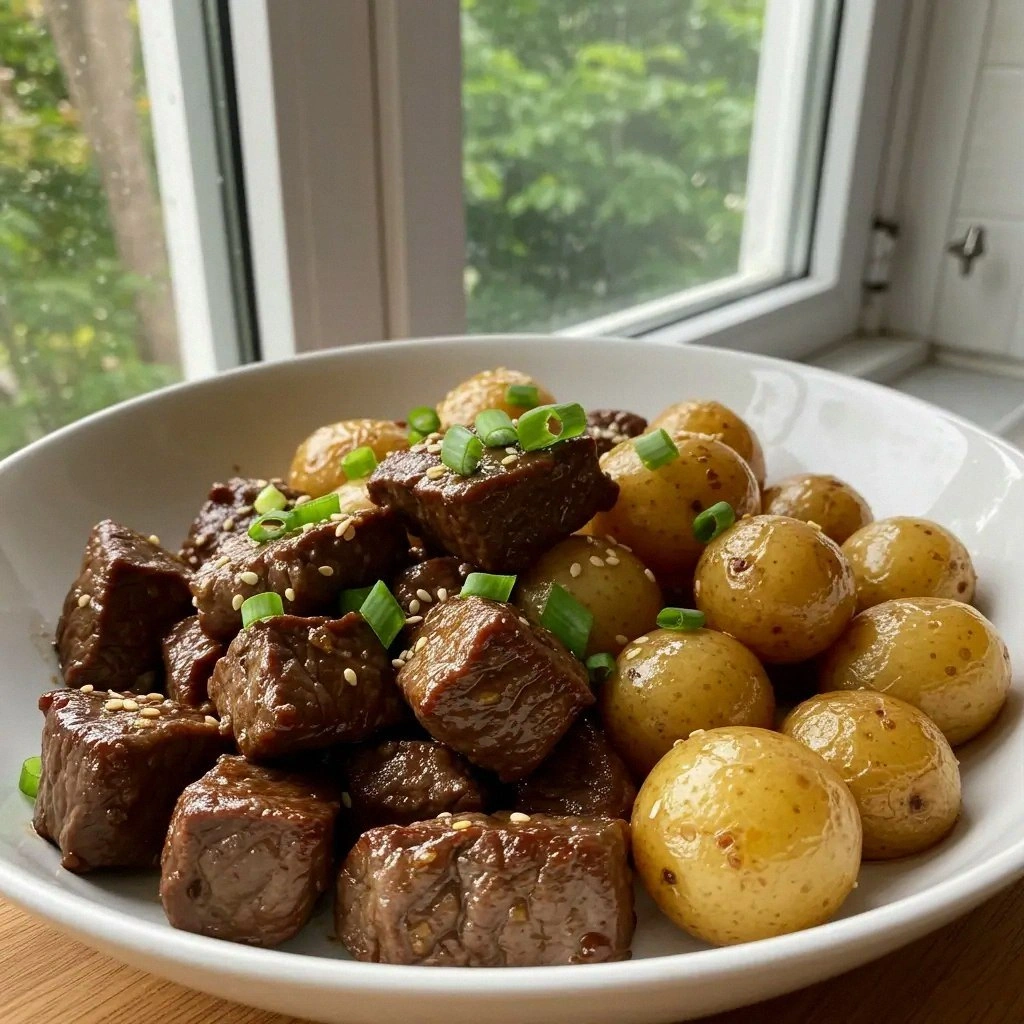
- Finish the dish by scattering sliced green onions and toasted sesame seeds over the top. Give everything a quick toss and then transfer to a serving platter. The bright green of the onions and the crunchy sesame seeds create a visual contrast that is as delightful as the taste.
- Serve immediately while the steak is still juicy and the potatoes remain crisp. Pair with a chilled glass of jasmine tea or a light white wine to complement the umami flavors. Enjoy the symphony of textures and tastes that make this dish unforgettable.
That's it — you did it. But hold on, I've got a few more tricks that'll take this to another level...
Insider Tricks for Flawless Results
The Temperature Rule Nobody Follows
Many cooks start the steak at a very high temperature, causing the exterior to burn before the interior cooks through. The trick is to sear the steak at medium‑high, then reduce to medium to finish. This ensures the juices stay locked inside. I once had a steak that was charred on the outside and raw inside; it was a disaster. Now, I always keep the heat steady and let the steak finish in the sauce.
Why Your Nose Knows Best
Your sense of smell can tell you exactly when the sauce has thickened to the right consistency. A glossy sheen and a slightly syrupy smell indicate the perfect glaze. If it still looks watery, give it another minute. Trusting your nose saves you from over-thickening the sauce.
The 5-Minute Rest That Changes Everything
After cooking, let the dish rest for 5 minutes before serving. This allows the juices to redistribute and the flavors to meld. The steak will be more tender, and the potatoes will keep their crisp edges. I’ve seen people skip this step and end up with a dish that feels rushed. The rest is the secret to a polished finish.
Using Fresh Herbs for a Bright Finish
A handful of fresh cilantro or parsley added just before serving adds a burst of color and freshness. It also cuts through the richness of the sauce, creating a balanced bite. If you’re not a fan of cilantro, mint or basil work wonderfully too. The key is to add them last, so they don’t wilt.
Choosing the Right Potatoes
Yukon Gold or red potatoes hold their shape better than russet when roasted. They also absorb the sauce more evenly, giving you a consistent bite. If you’re in a hurry, you can use frozen baby potatoes, but be sure to thaw them first. The texture will be slightly different, but the flavor stays on point.
Creative Twists and Variations
Spicy Pineapple Kick
Add diced pineapple and a splash of Sriracha to the sauce for a sweet‑heat explosion. The pineapple’s acidity balances the richness, while the Sriracha adds a fiery finish. This variation is perfect for summer gatherings and pairs well with a chilled coconut water.
Thai Basil Fusion
Swap the green onions for fresh Thai basil leaves and finish with a splash of lime juice. The basil adds a peppery aroma that elevates the dish, and the lime brightens the sauce. It’s a quick way to give the dish a Southeast Asian twist.
Ginger‑Garlic Butter Finish
Finish the dish with a knob of butter, a squeeze of lemon, and a sprinkle of fresh parsley. The butter creates a silky texture, while the lemon adds brightness. This version works well for a more indulgent dinner.
Vegetarian Version
Replace the steak with cubed firm tofu, pan‑fried until golden. Use a vegetarian oyster sauce and keep the rest of the sauce unchanged. The tofu absorbs the glaze beautifully, and the dish still delivers that umami punch.
Low‑Carb Alternative
Swap the potatoes for cauliflower florets, lightly seasoned and roasted. The cauliflower will take on the sauce’s flavor while keeping the carb count low. It’s a great option for those following a keto or low‑carb diet.
Breakfast Take‑Away
Serve the dish over a bed of scrambled eggs and top with a sprinkle of chives. The eggs add protein and a creamy texture that complements the steak. It’s a hearty breakfast that satisfies even the pickiest of eaters.
Storing and Bringing It Back to Life
Fridge Storage
Store leftovers in an airtight container in the refrigerator for up to 3 days. The sauce may thicken slightly; add a splash of water or broth before reheating to restore its glossy sheen. Keep the steak and potatoes separate if possible to maintain texture integrity. When reheated, the dish will still taste fresh and flavorful.
Freezer Friendly
For longer storage, freeze the dish in a freezer‑safe container for up to 2 months. Thaw overnight in the refrigerator before reheating. Reheat in a skillet over medium heat, adding a little water to loosen the sauce. The steak will stay tender, and the potatoes will regain their crispness.
Best Reheating Method
The best way to reheat is in a skillet on low heat, stirring gently until warmed through. This method preserves the sauce’s thickness and the texture of the steak and potatoes. Add a tiny splash of water before reheating to prevent the sauce from drying out. Serve immediately for the best experience.