Picture this: I’m standing in a cramped apartment kitchen, a battered skillet on the stove, and a half‑baked chicken that’s already turned into a sad, rubbery mess. I swear I had a moment of culinary rebellion, flipping the bird at the recipe book and deciding that “raw” might actually be the word of the day. The result? A half‑sliced steak that looked like it had been marinated in a secret sauce, but the flavor was flat, the texture was nothing short of mushy, and I could taste the disappointment in every bite. I stared at the plate, feeling like a chef who had just pulled a prank on himself. I was about to toss it into the trash when a friend texted, “You still on that carpaccio?” I laughed, but the curiosity was there: could I turn this disaster into something that actually works? I dare you to taste this and not go back for seconds.
The kitchen was a cacophony of sizzling, chopping, and the faint scent of citrus that danced in the air. I could hear the knife gliding through the beef, the gentle hiss of the oil as it warmed, and the clatter of the chopping board. The sight of the raw, translucent meat, its marbling like a river of silver, was almost hypnotic. The aroma of lime, fish sauce, and freshly minced garlic rose in a bright, almost electric bouquet. When I first tasted it, the beef was buttery, the acidity lifted every flavor, and the herbs added a green, almost herbal freshness that made my tongue sing. The texture was silky, not chewy, and the finish was a subtle zing that lingered like a good after‑taste.
What makes this version stand out? It’s the meticulous balance of acidity, umami, and spice, all layered in a way that each bite feels like a new experience. The beef is sliced thin enough to melt in your mouth but thick enough to hold the sauce without turning into a soup. The sauce is a symphony of lime, fish sauce, sugar, and a whisper of MSG that gives it depth without overpowering the delicate meat. The final crunch of fried shallots or toasted peanuts adds a textural contrast that breaks the monotony of raw meat. The dish is incredibly simple to assemble, yet it feels like you’ve spent hours in a Vietnamese kitchen. And the best part? It’s a crowd‑pleaser that turns even the most skeptical diner into a fan. This is hands down the best version you'll ever make at home.
I’ve experimented with every variation I could find, from adding a splash of soy sauce to swapping the beef for tuna. None of them had the same wow factor. The secret, I discovered, was in the thinness of the cut and the precise ratio of lime to fish sauce. The balance is so precise that a tiny tweak can swing the dish from sublime to flat. I’m about to walk you through every single step, and by the end, you’ll wonder how you ever made it any other way. Okay, ready for the game‑changer?
What Makes This Version Stand Out
- Taste: The marriage of bright lime, salty fish sauce, and a hint of sweetness creates a flavor profile that is both refreshing and deeply savory. This combination cuts through the richness of the beef, making each bite feel like a burst of freshness.
- Texture: The beef is sliced so thin that it practically melts in your mouth, while the crunchy fried shallots or toasted peanuts add a satisfying contrast that keeps the palate engaged.
- Ingredient Quality: Using a high‑grade eye‑round beef ensures a tender, buttery bite that doesn’t dry out when sliced. Fresh herbs and lime juice make the dish feel alive.
- Preparation Simplicity: No cooking required—just a quick marination and a few minutes of assembly. This makes it perfect for a last‑minute dinner or a sophisticated appetizer.
- Make‑Ahead Potential: The dish can be prepared up to four hours ahead, allowing the flavors to meld beautifully. The beef will stay fresh if kept chilled, and the crunchy toppings can be added right before serving.
- Presentation: The vibrant green herbs, bright citrus slices, and glossy sauce create a plate that looks as good as it tastes, making it a visual treat for any occasion.
Inside the Ingredient List
The Flavor Base
The lime juice is the star of the show, providing a citrusy brightness that lifts the entire dish. When you divide the lime into three portions, you can use one for the initial seasoning and the remaining two for the final glaze, creating layers of flavor. If you skip the lime, the dish will feel flat and lack that essential zing that cuts through the richness of the beef.
Fish sauce is the backbone of Vietnamese cooking, adding that deep, savory umami that balances the acidity. A small amount can transform a bland dish into something that feels like it was crafted in a kitchen of a seasoned chef. If you don’t have fish sauce, you can substitute with a mixture of soy sauce and a splash of oyster sauce, but the flavor will be noticeably different.
The Sweet Counterbalance
Sugar is a subtle but crucial component that rounds off the acidity and enhances the umami. It doesn’t overpower; it simply smooths the sharp edges of lime and fish sauce. If you prefer a sugar‑free version, a tiny pinch of honey or a sugar substitute can work, though it may alter the texture slightly.
The Texture Crew
Fried shallots and toasted peanuts add a delightful crunch that contrasts beautifully with the silky beef. These toppings also bring a nutty, caramelized flavor that deepens the overall taste profile. If you’re allergic to peanuts, you can replace them with chopped toasted sesame seeds or even crispy rice cereal for a different texture.
Herbs—cilantro, mint, and Thai basil—provide a fresh, aromatic finish. They add a green, almost herbal brightness that keeps the dish from feeling too heavy. If you’re out of fresh herbs, a small amount of dried basil can work in a pinch, but the freshness will be compromised.
The Unexpected Star
Red chili peppers give a subtle heat that keeps the dish from feeling one‑dimensional. They’re sliced thinly to provide a gentle kick rather than an overwhelming burn. If you prefer a milder version, use a smaller amount or replace them with a mild bell pepper for a sweeter flavor.
Everything’s prepped? Good. Let’s get into the real action…
The Method — Step by Step
- Start by chilling the beef in the freezer for about 15 minutes. This firm texture makes it easier to slice thinly. Once chilled, use a sharp knife to cut the meat into 1‑mm slices, angling the knife to maximize the surface area. The goal is to achieve a buttery, translucent layer that will hold the sauce without disintegrating.
- While the beef is resting, finely dice the onion and mince the garlic. The onion adds a subtle sweetness and a slight crunch, while the garlic provides an aromatic base. Combine the onion, garlic, sugar, fish sauce, lime juice, pepper, MSG, and a splash of water in a shallow bowl. Stir until the sugar dissolves, creating a glossy, well‑balanced sauce.
- Place the sliced beef in a large, shallow dish and pour half of the sauce over it. Toss gently to ensure every slice is coated. Let the beef marinate for 10 minutes, allowing the flavors to penetrate. During this time, you can prepare the toppings: thinly slice the chili peppers and roughly chop the fried shallots or toasted peanuts.
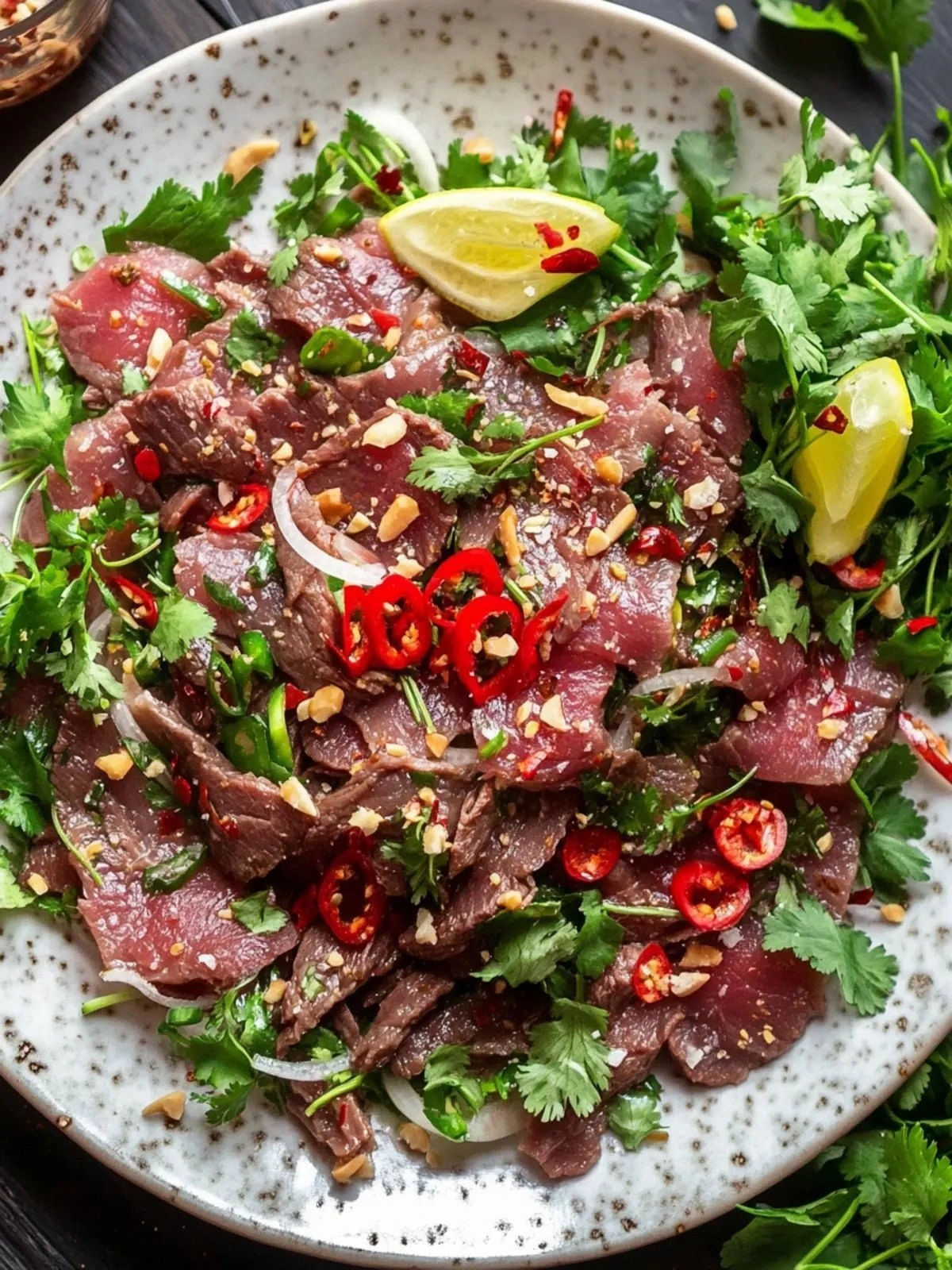
- After marination, arrange the beef slices on a serving platter in a fan‑like pattern. This not only looks elegant but also helps the sauce to coat evenly. Sprinkle the sliced chili peppers over the top, then add the chopped herbs for a burst of color and aroma.
- Now, drizzle the remaining sauce over the arranged beef. The sauce should coat each slice like a velvet blanket, giving the dish a glossy finish. Gently toss the platter to distribute the sauce uniformly.
- Add the crunchy toppings—fried shallots, toasted peanuts, or your choice of crunchy element. These will add a satisfying bite and a contrast to the silky meat. Sprinkle a few shrimp chips or black sesame rice crackers for an extra layer of texture and a subtle briny note.
- Serve immediately, or cover tightly with plastic wrap and refrigerate for up to four hours. If you’re preparing ahead, keep the toppings separate and add them just before serving to maintain their crunch.
- When ready to serve, give the dish a quick final toss to redistribute the sauce and toppings. Plate the carpaccio on a chilled stone or a simple white plate to emphasize the vibrant colors. Offer a small bowl of extra lime wedges and a splash of fish sauce for guests to adjust the seasoning to their liking.
That’s it — you did it. But hold on, I’ve got a few more tricks that will take this to another level, from perfect texture to unforgettable presentation.
Insider Tricks for Flawless Results
The Temperature Rule Nobody Follows
Never let the beef sit at room temperature for more than 30 minutes before slicing. The meat’s surface will become too warm, making it difficult to achieve the ultra‑thin slices that give carpaccio its signature texture. Keep the beef chilled until the last moment, then slice quickly. This small step can mean the difference between a silky melt and a soggy mess.
Why Your Nose Knows Best
Give the sauce a quick sniff before you pour it over the beef. The aroma of lime, fish sauce, and garlic will tell you if the balance is right. If it smells too sharp, add a pinch of sugar; if it’s too sweet, a splash of lime can bring it back to equilibrium. Your nose is a reliable quality control tool that you can’t afford to ignore.
The 5‑Minute Rest That Changes Everything
After marinating the beef, let it rest for exactly five minutes before assembling. This pause allows the flavors to fully permeate the meat, ensuring each bite is packed with depth. If you skip this step, the sauce will cling unevenly, resulting in a less cohesive taste.
The Crunch Factor
If you’re using peanuts, toast them lightly in a dry pan until they’re fragrant. This brings out their natural oils and adds a deeper, buttery flavor. For a different crunch, try crisped rice or even thinly sliced, dehydrated cucumber for a refreshing twist.
The Final Glaze
Finish the dish with a light drizzle of sesame oil or a splash of coconut milk for an extra layer of richness. This subtle addition can elevate the dish from good to unforgettable. Just a few drops are enough to coat the meat without overpowering the delicate balance.
Creative Twists and Variations
This recipe is a playground. Here are some of my favorite ways to switch things up:
Citrus Explosion
Swap lime for grapefruit or orange juice to give the dish a sweeter, more complex citrus profile. The bitterness of grapefruit pairs beautifully with the umami of fish sauce, creating a balanced, vibrant flavor that’s perfect for summer gatherings.
Spicy Thai Twist
Add sliced fresh Thai bird chilies and a splash of fish sauce mixed with a touch of chili oil. The heat is more pronounced, making it a hit for guests who love a fiery kick. The chili oil also adds a glossy finish that enhances visual appeal.
Herb‑Infused Variation
Use a mix of basil, mint, and dill for a more complex herb profile. The dill adds a subtle, almost sea‑weed flavor that pairs nicely with the fish sauce. This version is especially refreshing on a hot day.
Protein Swap
Replace beef with thinly sliced raw tuna or salmon for a pescatarian alternative. The fish’s delicate flavor and buttery texture complement the lime‑fish sauce sauce just as well. Just be sure to use sushi‑grade fish for safety.
Crunchy Cracker Finish
Top the carpaccio with crushed black sesame rice crackers or even thinly sliced, toasted bread crumbs for an added crunch. The crackers add a nutty, slightly sweet flavor that contrasts nicely with the fresh herbs.
Umami Boost
Add a spoonful of miso paste to the sauce for an extra depth of umami. The miso’s savory profile complements the fish sauce, creating a richer, more complex flavor that’s sure to impress.
Storing and Bringing It Back to Life
Fridge Storage
Store the pre‑assembled carpaccio in an airtight container in the refrigerator for up to four hours. Keep the crunchy toppings separate and add them just before serving to preserve their crispness. If you need to keep it longer, wrap the beef slices loosely with parchment paper to prevent them from sticking together.
Freezer Friendly
For longer storage, freeze the beef slices in a single layer on a baking sheet before transferring to a freezer bag. This prevents the slices from sticking. When ready to serve, thaw in the refrigerator overnight and add fresh sauce and toppings right before plating.
Best Reheating Method
Since the dish is raw, reheating is not recommended. However, if you must, lightly warm the beef in a hot pan for 30 seconds on each side just enough to warm it without cooking. Add a splash of water or broth to keep it moist, then drizzle fresh sauce and add the crunchy toppings.