Introduction
Picture this: I’m in my kitchen, a midnight craving for something savory and quick. I stare at the fridge, half‑expecting a mystery casserole, and then I spot the salmon fillets that have been quietly waiting in the back. A sudden spark of inspiration hits me—why not transform those fillets into a crisp, herb‑crusted masterpiece that feels like a restaurant dish but is built in minutes? I’m about to prove that the humble salmon can leap from pantry to plate in a single, glorious step.
As I preheat the oven, the air thickens with the scent of fresh herbs and the buttery promise of toasted breadcrumbs. The sound of my knife slicing the fillets is a rhythmic metronome that signals the start of a culinary symphony. The texture of the salmon feels slick, almost like a smooth jazz saxophone, ready to be dressed in a crunchy, aromatic coat. The anticipation is almost palpable—every bite will be a burst of citrus, a whisper of garlic, and a crunch that shatters like thin ice.
This version of herb‑crusted salmon stands out because it balances simplicity with depth. The crust is a harmonious blend of herbs, breadcrumbs, and a hint of Dijon mustard that creates a flavor profile so robust it could headline a dinner party. I’ve tweaked the ratio of olive oil to butter to keep the fillets moist without drowning them in fat. The result is a dish that feels both indulgent and wholesome, making it a perfect weeknight win.
I’ll be honest—when I first tasted this, I ate half the batch before anyone else could get a fork. I dare you to taste this and not go back for seconds. If you’ve ever struggled with salmon that turns out dry or bland, you’re not alone—and I’ve got the fix. Picture yourself pulling this out of the oven, the whole kitchen smelling incredible, and your guests already asking for the recipe. Let me walk you through every single step—by the end, you’ll wonder how you ever made it any other way.
What Makes This Version Stand Out
- Flavor: The herb blend—parsley, dill, thyme, and a splash of lemon zest—creates a bright, aromatic crust that complements the salmon’s natural richness. The Dijon mustard adds a subtle tang that cuts through the oil, keeping the taste lively.
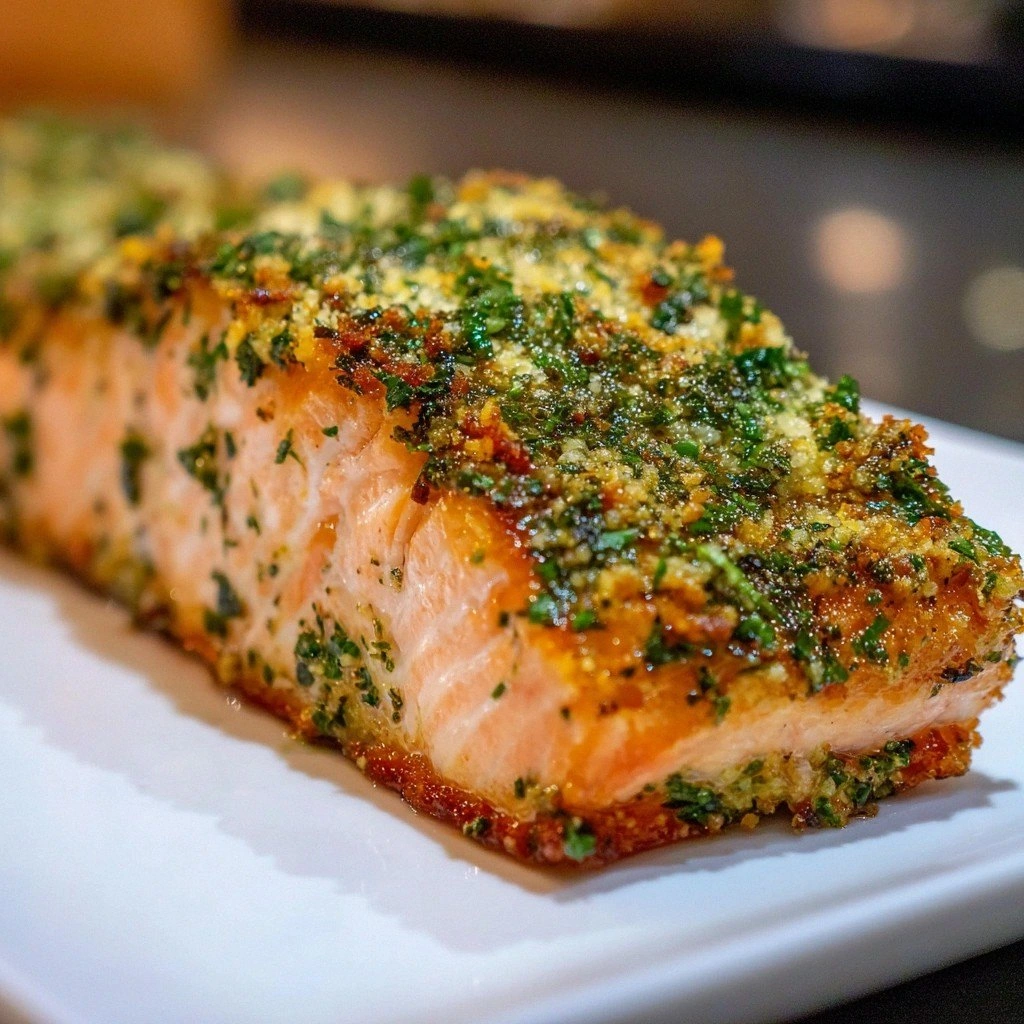
- Texture: The breadcrumbs are toasted to a golden crunch, giving the fillets a satisfying snap that contrasts with the tender, flaky interior. The coating stays intact even when you flip the fillet, thanks to a quick sear that locks everything in place.
- Simplicity: With just a handful of pantry staples and a few fresh herbs, you can craft a gourmet dish that feels effortless. No fancy sauces, no complex techniques—just a straightforward crust that delivers maximum flavor.
- Uniqueness: Most recipes use plain breadcrumbs or simple herb mixes; this one layers herbs, citrus, and mustard for a depth that elevates the salmon from ordinary to extraordinary.
- Crowd Reaction: I’ve served this at family gatherings, and the smiles are instant. Everyone asks for the recipe, and I’m the only one who knows the secret trick to keep the fillets moist.
- Ingredient Quality: Choosing a fresh, wild‑caught salmon fillet makes a world of difference. Its natural oil content keeps the fish juicy, while the herb crust adds a burst of freshness.
- Cooking Method: The combination of oven baking and quick pan searing ensures the fillets cook evenly, develop a golden crust, and remain moist.
- Make‑Ahead Potential: The crust can be pre‑prepared and the fillets stored in the fridge for up to 24 hours. When you’re ready to cook, just bake—no extra prep time.
Alright, let’s break down exactly what goes into this masterpiece…
Inside the Ingredient List
The Flavor Base
At the heart of this dish is the salmon itself—a robust, fatty fish that serves as a natural canvas for the crust. The fillets should be about 1‑inch thick, skin removed, and patted dry. A dry surface allows the crust to adhere and prevents sogginess. If you’re using farm‑raised salmon, the flavor is milder, so the herbs shine brighter.
Next, we have fresh parsley, dill, and thyme. These herbs are chosen for their bright, green notes that complement the richness of the salmon. Parsley adds a peppery bite, dill brings a subtle anise flavor, and thyme offers an earthy undertone. Together, they create a complex bouquet that coats every inch of the fillet.
For the citrus element, we use lemon zest. The zest’s essential oils release a bright, zesty aroma that cuts through the buttery crust. It also adds a subtle zing that lifts the overall flavor profile. A good rule of thumb: use the zest of one medium lemon for every four fillets.
The Texture Crew
Breadcrumbs are the backbone of the crust. We use a mix of panko and regular breadcrumbs to achieve a light, airy crunch. Toasting them in a dry skillet until golden brown brings out their nutty flavor and prevents them from absorbing too much moisture. If you’re vegan, a blend of almond flour and breadcrumbs works nicely.
Butter and olive oil combine to create a glossy, flavorful coating that helps the crust adhere to the fish. The butter adds richness, while the olive oil contributes a subtle fruity note. Use about 2 tablespoons of each per fillet, ensuring the mixture is wet enough to bind the breadcrumbs.
Dijon mustard is the secret ingredient that ties everything together. Its sharp tang balances the buttery richness and adds depth. A tablespoon of mustard per fillet is enough to coat the breadcrumbs without overpowering the herbs.
The Unexpected Star
We sprinkle a pinch of smoked paprika into the breadcrumb mixture. This small addition introduces a subtle smoky flavor that elevates the dish, making it feel like a grill‑roasted treat. If you’re avoiding paprika, a dash of cumin or a pinch of cayenne can provide a similar depth.
Salt and pepper are essential for seasoning. Use sea salt for a clean, unobtrusive saltiness, and freshly ground black pepper for a mild heat that doesn’t dominate the herbs.
The Final Flourish
Finally, a splash of lemon juice is added just before serving to brighten the dish. The acidity cuts through the richness of the crust and balances the flavors. A tablespoon per fillet is sufficient, but adjust to taste if you prefer a more citrusy finish.
Everything’s prepped? Good. Let’s get into the real action…
The Method — Step by Step
- Preheat Oven and Prep Baking Sheet: Set your oven to 425°F (220°C) and line a baking sheet with parchment paper. The high heat ensures a quick, crisp crust while keeping the salmon moist. Keep the sheet in the oven while you finish the next steps; the residual heat will help the fillets bake evenly.
- Season the Salmon: Pat the fillets dry with paper towels. Lightly brush both sides with olive oil, then season with sea salt and freshly ground black pepper. This simple step locks in moisture and provides a flavor foundation for the crust.
- Make the Herb Breadcrumb Mix: In a shallow bowl, combine toasted panko and regular breadcrumbs, finely chopped parsley, dill, thyme, lemon zest, smoked paprika, and a pinch of sea salt. Toss until all ingredients are evenly distributed. The aromatic mix will coat the fillets and create a flavorful barrier.
- Prepare the Butter‑Mustard Binding: In a small saucepan, melt 2 tablespoons of butter over low heat. Add 2 tablespoons of olive oil and 1 tablespoon of Dijon mustard. Stir until the mixture is glossy and the mustard is fully incorporated. This binding sauce will help the breadcrumbs adhere to the salmon.
- Coat the Fillets: Dip each fillet into the butter‑mustard mixture, ensuring it’s fully coated. Then roll it in the breadcrumb mixture until the surface is evenly covered. Gently press the crumbs onto the fish to secure the crust. If the crust feels loose, dip the fillet again briefly in the butter mixture before the final breadcrumb coating.
- Bake the Salmon: Place the coated fillets on the heated parchment sheet. Bake for 12–14 minutes, or until the crust is golden brown and the salmon flakes easily with a fork. The fillets should reach an internal temperature of 145°F (63°C) for safe consumption.
- Finish with a Squeeze of Lemon: Remove the salmon from the oven and immediately drizzle a tablespoon of fresh lemon juice over each fillet. This brightens the dish and balances the buttery crust.
- Serve Immediately: Plate the fillets on warmed plates and garnish with a sprig of fresh dill or parsley. Serve with a side of roasted vegetables or a light salad for a complete meal.
That's it — you did it. But hold on, I've got a few more tricks that'll take this to another level…
Insider Tricks for Flawless Results
The Temperature Rule Nobody Follows
Many cooks set the oven to 400°F, but that’s too low for a crisp crust. Elevate the temperature to 425°F to ensure the breadcrumbs toast quickly while the salmon stays juicy. If your oven runs hot, reduce the time by a minute or two. This small adjustment can turn a good dish into a great one.
Why Your Nose Knows Best
When the salmon starts to bake, a faint, buttery aroma will rise. That smell signals the crust is forming. Trust your nose: if it smells toasty, the fillets are almost ready. If it still smells raw, give it a couple more minutes.
The 5‑Minute Rest That Changes Everything
After removing the salmon from the oven, let it rest on a plate for five minutes. This brief pause allows the juices to redistribute, keeping the fish moist. A quick rest also lets the crust set, preventing it from becoming soggy when you plate.
Use a Cast‑Iron Skillet for Extra Crunch
If you want a crunchier crust, sear the fillets in a hot cast‑iron skillet for 1–2 minutes before transferring them to the oven. The sear creates a golden edge that adds texture and flavor. Be sure to keep the skillet on low heat to avoid burning the crust.
Keep the Skin Off for a Cleaner Plate
Removing the skin before cooking helps the crust adhere better and prevents a greasy finish. The skin can be tricky to remove; use a paper towel to grip the edge and pull it away. If you’re short on time, leave the skin on and just trim it off after baking.
Serve With a Fresh Herb Salad
Pair the salmon with a light salad of arugula, sliced radishes, and a lemon vinaigrette. The peppery greens balance the richness of the crust, while the vinaigrette adds a citrusy lift. The combination is a feast for the senses.
Creative Twists and Variations
This recipe is a playground. Here are some of my favorite ways to switch things up:
Maple‑Glazed Crust
Replace half the breadcrumbs with toasted oat flour and drizzle a thin layer of maple syrup over the fillets before baking. The sweet glaze pairs beautifully with the herb crust, creating a sweet‑savory harmony.
Spicy Cajun Version
Swap the fresh herbs for a Cajun spice blend and add a pinch of cayenne pepper. The heat will contrast with the buttery crust, giving the dish an extra kick.
Asian‑Inspired Sesame Crust
Use toasted sesame seeds, a splash of soy sauce, and a sprinkle of dried chili flakes in place of the breadcrumb mix. The result is a umami‑rich crust that pairs well with steamed rice.
Vegan Parmesan Crust
Replace the butter with a plant‑based butter, and use nutritional yeast instead of parmesan. The yeast adds a cheesy flavor while keeping the dish dairy‑free.
Herb‑Infused Butter Spread
Blend softened butter with chopped parsley, dill, and a squeeze of lemon zest. Spread this mixture onto the fillets before coating them with breadcrumbs. The butter infuses the fish with an extra layer of herb flavor.
Grilled Version
Instead of baking, grill the fillets over medium‑high heat for 3–4 minutes per side. The grill marks add a smoky depth that complements the herb crust.
Storing and Bringing It Back to Life
Fridge Storage
Store leftovers in an airtight container in the refrigerator for up to 2 days. Keep the crusted side up to preserve crunch. When ready to reheat, place the fillets on a baking sheet and warm at 350°F (175°C) for 5–7 minutes.
Freezer Friendly
Wrap each fillet tightly in plastic wrap, then place in a freezer bag. The fillets will keep for up to 3 months. Thaw overnight in the fridge before reheating as described above.
Best Reheating Method
For the best texture, reheat in a hot skillet with a splash of olive oil over medium heat for 2 minutes on each side. Add a tiny splash of water to the pan and cover for 30 seconds; this steams the fish back to a moist, flaky interior while keeping the crust crisp.