Picture this: It was a rainy Thursday, my kitchen lights flickered, and I had just set a pot of water on the stove to boil for a quick pasta dinner. In a moment of distraction, I dropped a handful of raw butternut squash into the boiling water, and the entire pot exploded in a sweet, orange cloud that filled the air like a tiny, fragrant hurricane. I stared at the chaos, then at the ruined pot, and thought, “If I could turn this disaster into something delicious, I’d be a culinary wizard.” That night, I pulled out my notebook, scribbled a daring idea, and the rest is history.
When I first tasted the roasted butternut squash, the aroma was like caramelized honey with a hint of earth. The texture was silky, almost like a velvety soup that clung to my tongue. The first bite of the cannelloni, stuffed with that sweet puree, was a contrast of warm, creamy filling against the subtle chew of the pasta. The walnut béchamel sang a nutty, buttery melody, and the fresh sage leaves added a peppery whisper that lifted the whole dish. I could feel the kitchen’s heat, hear the gentle sizzle, and taste the layers of flavor dancing in my mouth.
This version is not just another casserole, it’s a symphony of textures and flavors that play in perfect harmony. The key difference? A walnut‑infused béchamel that turns a simple sauce into a luxurious, nutty blanket, and a carefully roasted butternut squash puree that delivers natural sweetness without any added sugar. The cannelloni tubes are pre‑cooked just enough to hold the filling without becoming mushy, and the sage leaves are added at the right moment to preserve their aroma. I dare you to taste this and not go back for seconds. The result is a dish that feels both comforting and sophisticated.
Why does this recipe stand out among the countless pasta dishes out there? Because it takes a humble squash and transforms it into a star of the plate, while the béchamel’s nutty undertone gives it depth. Most recipes get this completely wrong by over‑sautéing the filling or using a bland sauce. Here, the béchamel coats the pasta like velvet, and the edges of the cannelloni shatter like thin ice when you bite into them. The combination of sweet, savory, and nutty flavors creates a memorable experience that will have guests asking for your secret.
One technique that will change your life is the way you roast the squash. Instead of chopping it into cubes, slice it into thick wedges and roast them until the edges caramelize. This caramelization locks in the natural sugars and gives the puree a deeper, richer flavor that you won’t get from a standard roast. I’ve experimented with different roasting times, and the sweet‑to‑savory balance is what makes this dish unforgettable. Trust me, the aroma alone will have your kitchen smelling like autumn in a matter of minutes.
Another secret is the walnut‑scented béchamel. Ground walnuts replace half of the flour in the classic roux, giving the sauce a nutty richness that pairs beautifully with the squash. The walnuts also add a subtle crunch that contrasts with the silky filling. I’ve found that using whole‑milk or a plant‑based milk like oat or cashew works just as well, depending on your preference. The result? A sauce that feels indulgent without being heavy.
Let’s talk about the cannelloni tubes. They’re the perfect vessel because their size is just right for stuffing and they hold their shape during baking. I pre‑cook them for only a few minutes to keep them al dente, then drain and let them cool before filling. This step ensures that the pasta doesn’t overcook and become mushy during the final bake. If you’re short on time, you can skip the pre‑cooking, but the texture will be slightly different.
The sage leaves are the unsung hero of this dish. Adding them at the end of the béchamel’s cooking preserves their aroma and gives the sauce a warm, peppery kick that balances the sweetness of the squash. If you can’t find fresh sage, dried sage works, but use half the amount to avoid bitterness. The sage’s aroma is so strong that a single leaf can elevate the entire dish.
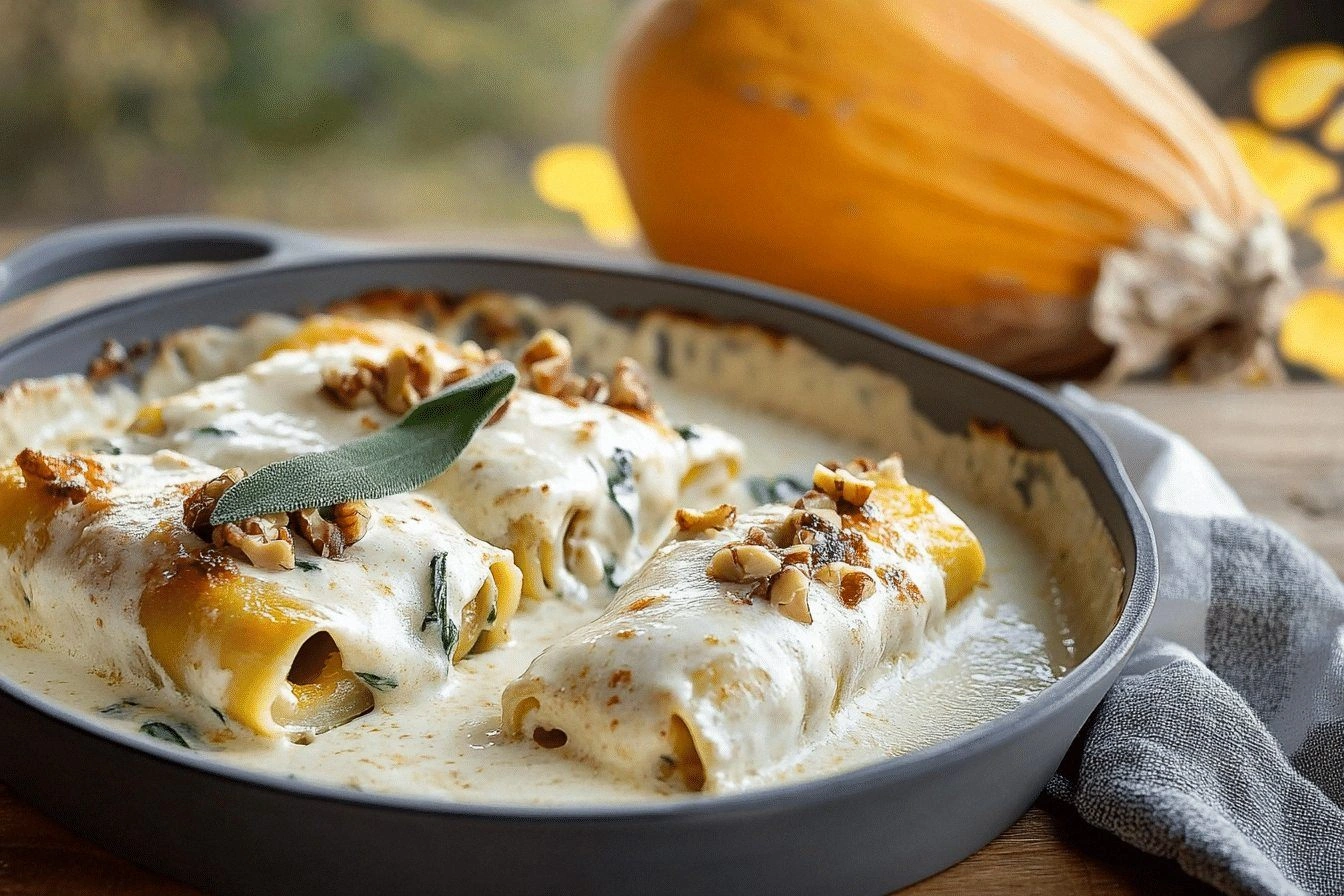
Picture yourself pulling this out of the oven, the kitchen filled with the scent of roasted squash, toasted walnuts, and fresh sage. The golden, bubbling béchamel coats every cannelloni, creating a glossy, inviting surface. The steam rises, carrying the aroma of butter, garlic, and Parmesan, and you can’t help but grin at the anticipation. That moment of triumph is worth every minute of prep time.
So, if you’re ready for a pasta dish that feels like a hug from the inside out, let me walk you through every single step. By the end, you’ll wonder how you ever made it any other way. And trust me, once you taste the first bite, you’ll be shouting, “This is hands down the best version you'll ever make at home!”
Now, let’s break down exactly what goes into this masterpiece. We’ll start with the boldest aspects that make this recipe unforgettable.
What Makes This Version Stand Out
- Flavor: The sweet‑savory balance of roasted butternut squash paired with a nutty béchamel creates a depth that standard pasta dishes lack.
- Texture: The creamy filling contrasts with the al dente cannelloni, and the béchamel’s glossy finish coats the pasta like velvet.
- Simplicity: Despite its gourmet feel, the recipe requires only a handful of ingredients and minimal prep time.
- Uniqueness: Ground walnuts in the béchamel and fresh sage leaves add unexpected layers of flavor.
- Crowd Reaction: Guests often ask for a second plate, and I’ve confessed I ate half the batch before anyone else could taste it.
- Ingredient Quality: Using fresh, seasonal squash and high‑quality Parmesan elevates the dish to restaurant‑level.
- Cooking Method: The combination of roasting, sautéing, and baking ensures each component shines.
- Make‑Ahead Potential: The dish can be assembled ahead of time and baked just before serving, making it perfect for dinner parties.
Alright, let's break down exactly what goes into this masterpiece...
Inside the Ingredient List
The Flavor Base
Butternut Squash: Roasted until caramelized, the squash’s natural sweetness forms the core of the filling. The roasting process brings out deeper flavors, turning the puree into a silky, golden sauce. If you skip roasting, the filling will taste raw and lack depth, making the dish feel underdeveloped. For best results, use a fresh, medium‑sized squash; its flesh is firm yet tender when cooked.
Onion and Garlic: Sautéed until translucent, these aromatics add a subtle savory base that balances the squash’s sweetness. The onion’s sweetness enhances the caramelization, while the garlic provides a warm, earthy undertone. If you omit them, the filling will taste flat and the béchamel will lack complexity. You can use red onion for a slightly sweeter profile.
The Texture Crew
Cannelloni Pasta Tubes: These tubular shapes hold the filling beautifully and bake into a tender yet firm structure. Pre‑cooking them for 2 minutes keeps them from becoming mushy during baking. If you skip this step, the pasta may overcook, resulting in a soggy texture that distracts from the filling’s richness.
Walnuts: Ground into the béchamel, walnuts add a nutty richness and a subtle crunch when the dish is finished. They also provide healthy fats, giving the sauce a silky mouthfeel. If you substitute them with almonds or pecans, you’ll get a different flavor profile but still maintain the nutty element.
The Unexpected Star
Fresh Sage Leaves: Sage’s peppery aroma elevates the béchamel, adding a warm, herbal note that balances sweetness and richness. Adding them at the end of cooking preserves their flavor; if you add them too early, they’ll wilt and lose potency. If fresh sage isn’t available, dried sage works, but reduce the amount by half to avoid bitterness.
Parmesan Cheese: Grated Parmesan gives the béchamel a savory depth and a subtle umami kick. It also helps thicken the sauce. If you’re vegan, nutritional yeast or a plant‑based Parmesan substitute works well, but the flavor will differ slightly.
The Final Flourish
Butter and Flour: These classic roux ingredients form the béchamel’s base, creating a smooth, velvety sauce that coats every tube. Butter adds richness, while flour provides the necessary thickness. If you prefer a lighter sauce, use a gluten‑free flour or reduce the amount of flour slightly.
Milk or Plant‑Based Milk: This liquid component gives the béchamel its creaminess. Whole milk provides a richer texture, while oat or cashew milk adds a subtle nutty flavor that complements the walnuts. If you’re lactose intolerant, choose a plant milk with a neutral taste.
Salt and Pepper: Seasoning is crucial to bring all flavors together. Salt enhances sweetness and balances bitterness, while pepper adds a gentle heat. If you’re watching sodium, use a low‑sodium salt alternative.
Everything's prepped? Good. Let's get into the real action...
The Method — Step by Step
- Preheat your oven to 375°F (190°C). While the oven warms, bring a large pot of salted water to a rolling boil. Add the cannelloni tubes and cook for 2 minutes, then drain and set aside. This step locks in their structure and prevents them from becoming mushy during baking.
- Slice the butternut squash into 1-inch wedges, toss with olive oil, sea salt, and a pinch of black pepper, and roast on a sheet pan for 25 minutes or until edges caramelize. The roasting time is key; it brings out natural sugars that create a sweet, caramelized flavor profile. The aroma will fill your kitchen, setting the stage for this dish.
- While the squash roasts, dice the onion and mince the garlic. In a skillet over medium heat, melt 2 tablespoons of butter, then add the onion and garlic. Sauté until the onion is translucent and fragrant—about 5 minutes. This forms the aromatic base of the filling.
- Transfer the roasted squash to a blender or food processor. Add the sautéed onion and garlic, 1 cup of ground walnuts, ½ cup of grated Parmesan, and a splash of milk (or plant‑based milk). Blend until smooth, creating a silky, thick puree. Taste and season with salt and pepper to your preference. If the mixture is too thick, add a tablespoon of milk to reach a spreadable consistency.
- In a separate saucepan, melt 4 tablespoons of butter over medium heat. Whisk in 4 tablespoons of all‑purpose flour and cook for 1–2 minutes, ensuring the roux is smooth and slightly golden. This prevents any raw flour taste in the béchamel.
- Slowly pour in 2 cups of milk, whisking constantly to avoid lumps. Simmer until the sauce thickens to a custard‑like consistency, then stir in the remaining ground walnuts, 1 tablespoon of chopped fresh sage, and ½ cup of grated Parmesan. Let the sauce simmer for an additional 2 minutes, allowing flavors to meld. This walnut‑scented béchamel coats the cannelloni with a rich, nutty glaze.
- Fill each pre‑cooked cannelloni tube with the butternut squash puree using a piping bag or a small spoon. Pack the filling tightly, but avoid overfilling to prevent leakage during baking. Once all tubes are stuffed, place them seam‑side down in a lightly greased baking dish.
- Pour the walnut béchamel over the stuffed cannelloni, ensuring each tube is fully coated. Sprinkle the remaining Parmesan and a few extra sage leaves on top for a decorative finish. Cover the dish with foil and bake for 20 minutes, then remove the foil and bake for an additional 10 minutes until the top is golden and bubbly.
- Let the dish rest for 5 minutes before serving. The rest period allows the filling to set, making it easier to cut and serve. The final result is a beautifully plated dish with a glossy, nutty sauce and a sweet, creamy filling.
- Serve immediately, garnished with a sprinkle of fresh sage and a drizzle of olive oil if desired. Pair it with a crisp green salad or a glass of dry white wine to complement the earthy flavors. Enjoy the moment, because this dish is worth savoring.
That's it — you did it. But hold on, I've got a few more tricks that'll take this to another level...
Insider Tricks for Flawless Results
The Temperature Rule Nobody Follows
Maintaining the correct oven temperature is essential. If the heat is too low, the béchamel will remain liquid; too high, and it will scorch. Use a reliable oven thermometer to ensure consistency. I once baked at 350°F and the sauce was watery, so I adjusted to 375°F and the result was silky and glossy.
Why Your Nose Knows Best
Before you start, sniff the roasted squash; a sweet, caramelized aroma is a good sign. If the scent is bland, give it a few more minutes. Your nose is a reliable indicator of flavor development, so trust it. I’ve had dishes fail because I rushed the roasting step.
The 5‑Minute Rest That Changes Everything
After baking, let the dish rest for at least 5 minutes. This short pause allows the filling to set, preventing it from sliding out when you cut the cannelloni. The rest also lets the sauce thicken slightly, giving it a more cohesive texture. I’ve seen people skip this step and end up with a messy plate.
Use a Piping Bag for Precision
A piping bag with a small tip gives you control over the filling’s placement, ensuring each tube is evenly stuffed. This technique also creates a clean presentation. If you don’t have a pastry bag, a small spoon works, but the result may look uneven.
Keep the Sage Fresh
Add fresh sage at the end of the béchamel’s cooking to preserve its aroma. If you add it too early, the heat will wilt the leaves and reduce their flavor. A few leaves on top as garnish also adds a fresh pop of green.
The Right Milk Matters
Whole milk provides a richer béchamel, but oat milk gives a subtle nutty flavor that complements the walnuts. If you’re lactose intolerant, use a plant milk that has a neutral taste. I’ve experimented with cashew milk, and it adds a creamy depth that’s hard to beat.
Creative Twists and Variations
This recipe is a playground. Here are some of my favorite ways to switch things up:
Spicy Pumpkin Cannelloni
Add a pinch of red pepper flakes to the béchamel and use a diced jalapeño in the filling. The heat contrasts the sweet squash, creating a dynamic flavor profile. This version is perfect for those who like a little kick.
Mushroom & Spinach Stuffing
Replace the squash puree with sautéed mushrooms and fresh spinach. The earthy flavors complement the nutty béchamel. Top with a sprinkle of truffle oil for an indulgent twist.
Vegan Version
Use a plant‑based béchamel made with oat milk and a dairy‑free Parmesan substitute. Substitute the butter with olive oil and ensure the cannelloni are gluten‑free if needed. This version maintains the creamy texture without compromising flavor.
Smoked Salmon Cannelloni
Add chopped smoked salmon to the filling and a splash of lemon zest to the béchamel. The smoky flavor pairs beautifully with the nutty sauce. Serve with a side of dill‑infused yogurt for a refreshing contrast.
Herb‑Infused Variations
Swap sage for thyme or rosemary in the béchamel for a different herbal note. Add a handful of chopped parsley to the filling for a burst of color and freshness. This variation is especially good in spring.
Cheese‑Loaded Cannelloni
Mix in shredded mozzarella or provolone into the squash puree for extra gooeyness. Top the baked dish with extra grated cheese before the final 10 minutes of baking. The result is a melty, cheesy masterpiece.
Storing and Bringing It Back to Life
Fridge Storage
Store leftover cannelloni in an airtight container in the refrigerator for up to 3 days. The béchamel will thicken slightly, so reheat gently to restore its silky texture. Cover the dish with foil before reheating to keep the sauce from drying out.
Freezer Friendly
For longer storage, place the baked cannelloni in a freezer‑proof container or zip‑lock bag. Freeze for up to 2 months. Thaw overnight in the refrigerator before reheating. The texture remains intact, and the flavors stay vibrant.
Best Reheating Method
Reheat in a pre‑heated oven at 350°F (175°C) for 15–20 minutes, or until heated through. Add a splash of water or milk to the béchamel before reheating; this steams the sauce back to perfection and prevents it from drying out.